
Last updated November 24, 2026
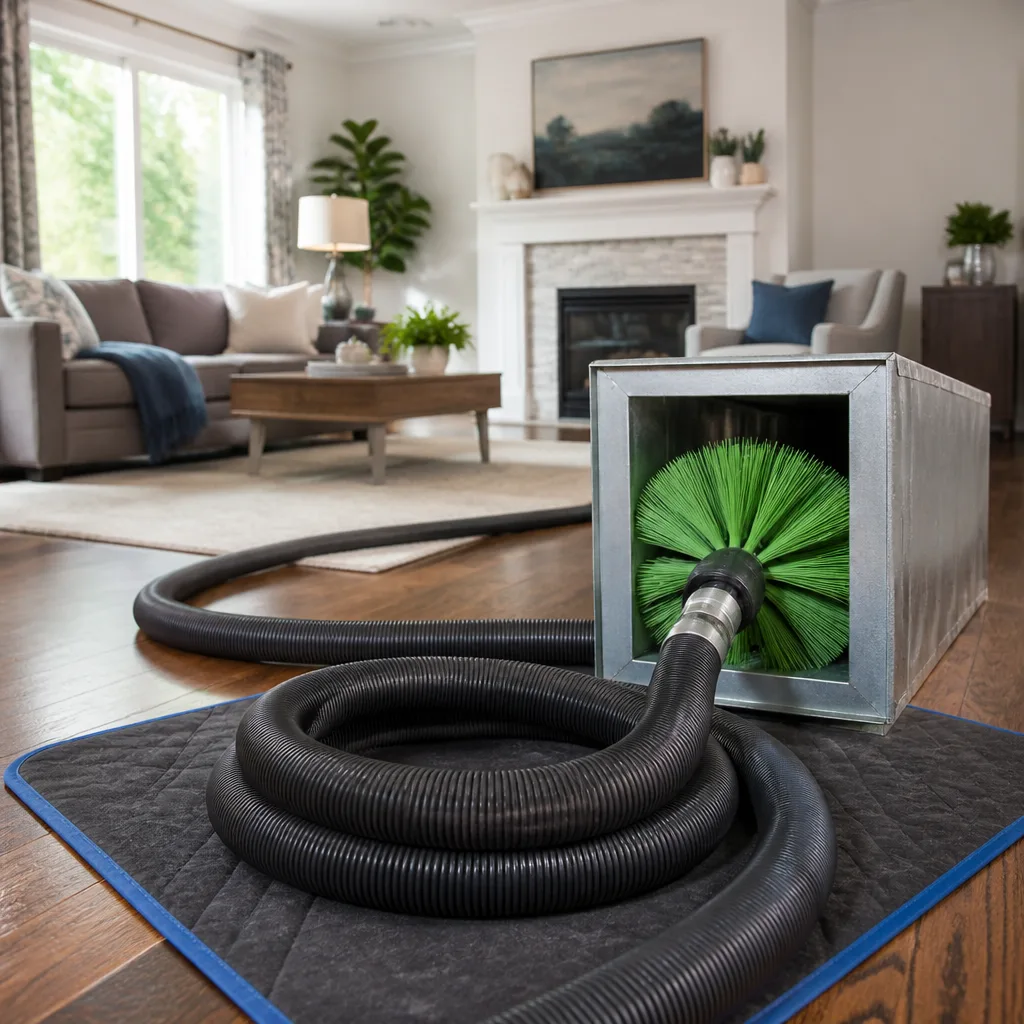 Whole-home duct cleaning
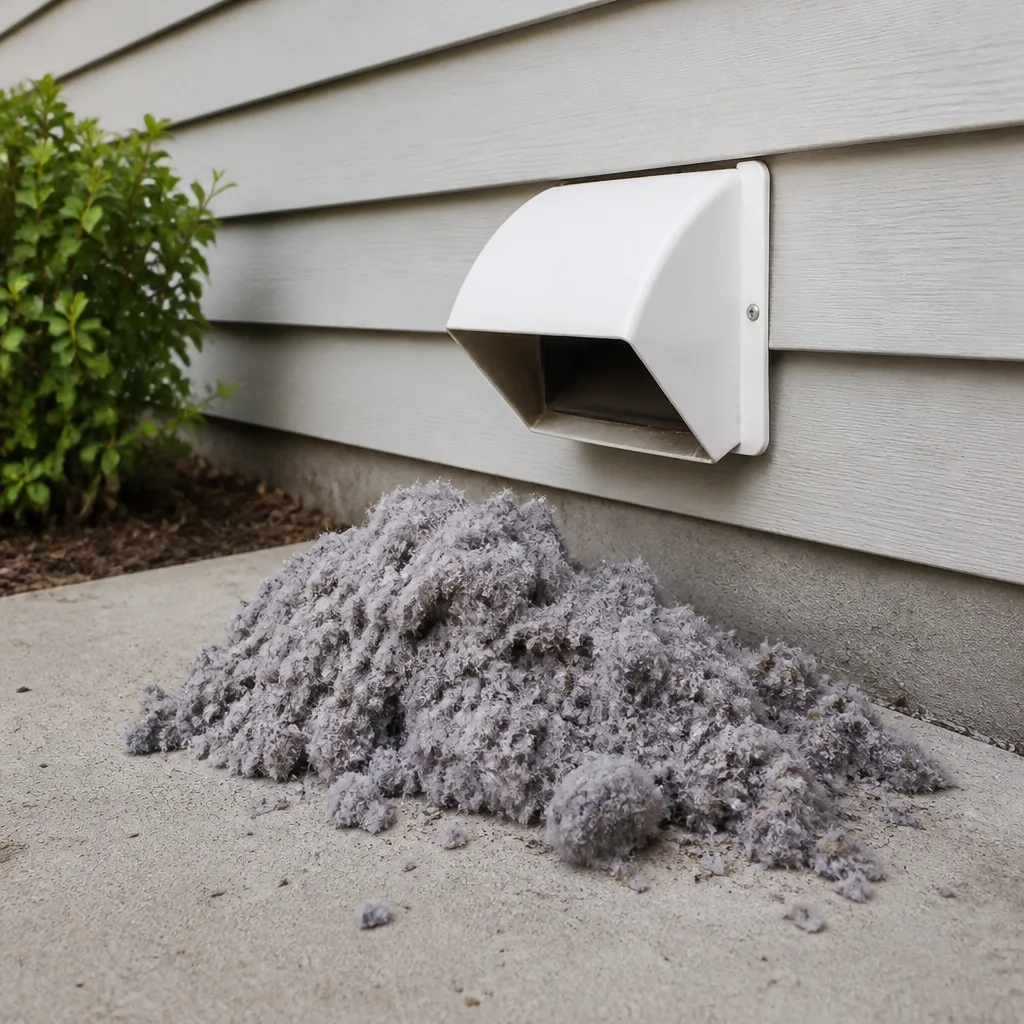 Dryer vent cleaning
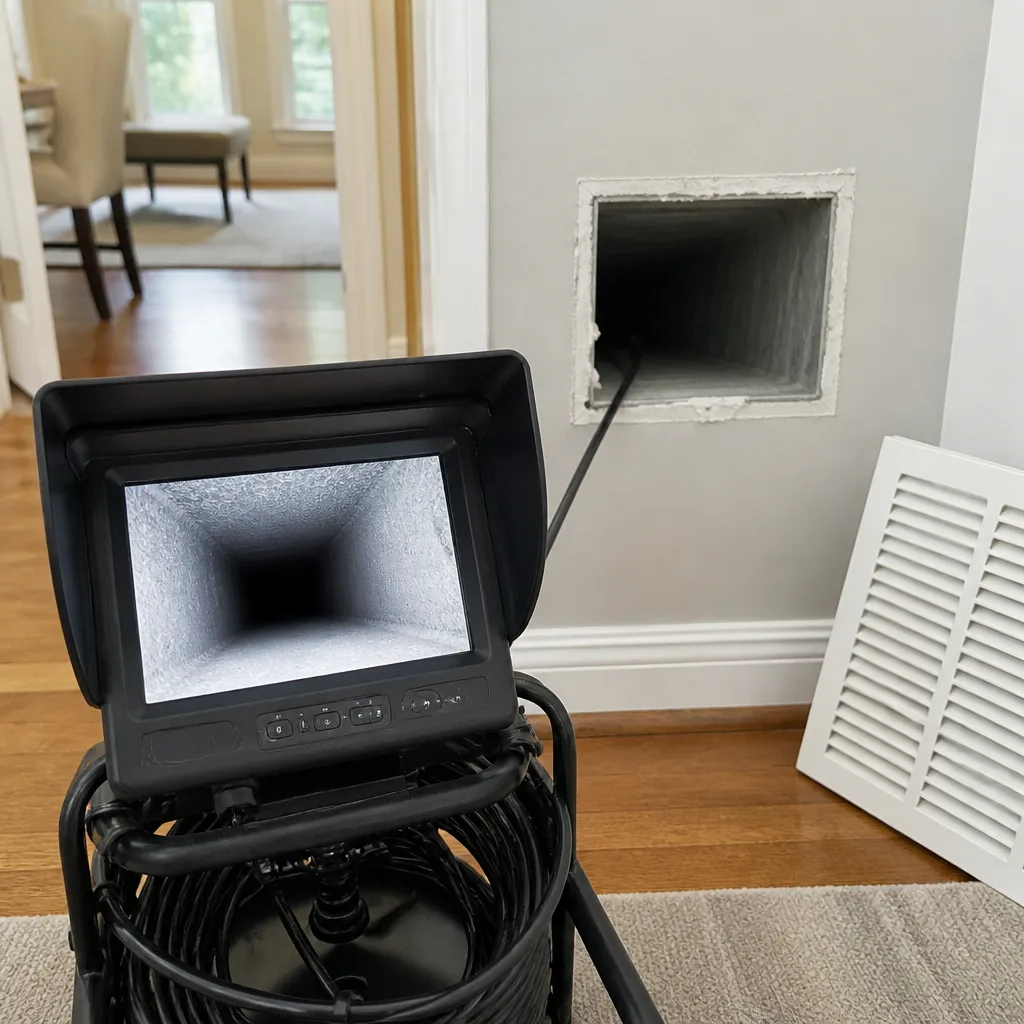 Camera inspection
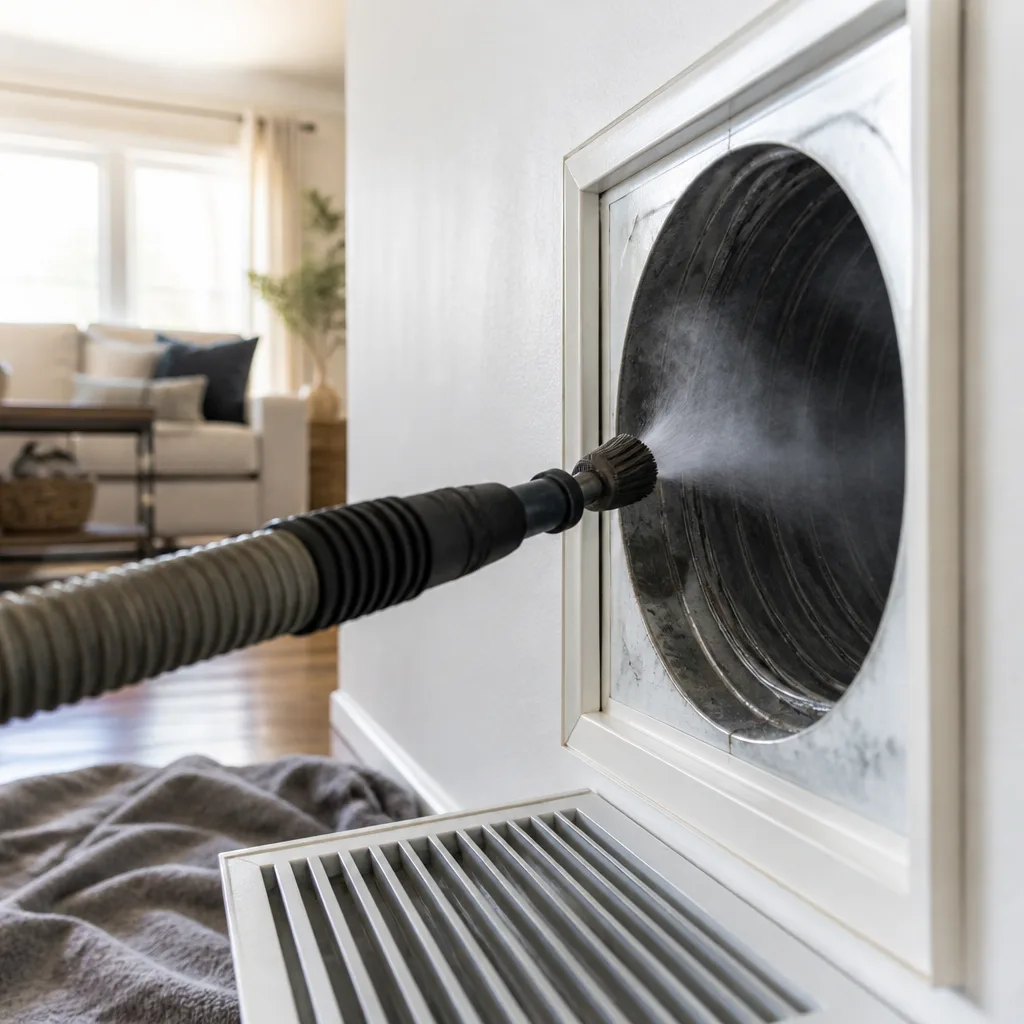 Sanitizing & deodorizing
Whole-system duct and dryer vent check with before-and-after photos - you see exactly what came out of your vents
That "$99 whole-house special" is a bait ad - the real number appears once they are in your hallway, or the "clean" is a shop-vac at the register. We photograph the inside of your ducts before and after instead.
How to Hire an Air Duct Cleaning Contractor in South Coast Metro: A Step-by-Step Guide
Most homeowners shop for duct cleaning the way they shop for a new water heater: find the lowest quote, book it, done. That approach fails here. California doesn’t require a mandatory license to clean air ducts, which means the person who shows up with a hose and a shop vacuum is legally no different from a crew running a rotary-brush system and HEPA containment. The vetting burden lands on you. In this guide we’ll walk through the technical questions that actually separate a real system clean from a cosmetic dust pass, the credentials worth verifying, the red flags hiding inside per-vent pricing, and how to write a scope of work that holds a contractor to the full job. It’s built for South Coast Metro homeowners and property managers who want answers, not a coupon.
Quick Answer
Hiring a duct cleaning contractor in South Coast Metro comes down to three checks: verify the equipment by name (a rotary-brush system plus HEPA-grade negative-air containment, not a shop vacuum), verify third-party credentials like NADCA membership and EPA 608 certification independently, and insist on a written scope of work that lists every component cleaned with before-and-after photos. Price should be a whole-system figure, agreed before work starts, not a per-vent number that invites shortcuts.
Styles & brands we work with
- Whole-home duct cleaning
- Dryer vent cleaning
- Camera inspection
- Sanitizing & deodorizing
Table of Contents
- Why California Has No Duct Cleaning License – and What That Means for You
- The Equipment Question: What Separates Professional Systems From Shop Vacs
- Which Credentials Actually Mean Something, and How to Verify Them
- Eight Questions to Ask Before You Book
- What Per-Vent Pricing Really Tells You
- How to Structure a Scope of Work That Binds the Contractor
- Red Flags in Quotes and Sales Pitches
- Common Mistakes to Avoid
- When to Call a Professional
- Frequently Asked Questions
Why California Has No Duct Cleaning License – and What That Means for You
Any contractor can claim “truck-mounted equipment” and “HEPA vacuums.” The differentiating question is whether their vacuum generates the negative static pressure needed to actually capture dislodged debris before it recirculates into your living space. That gap exists because California does not require a contractor license specifically for duct cleaning. There’s no state exam, no mandated training hours, no code stand-ard for how a duct is cleaned. A general contractor’s license or a handyman’s business license doesn’t prove anyone on the crew has ever opened a plenum.
What this means in practice: the consumer protection you’d normally expect from licensing falls on you. A contractor’s business license only proves they registered to collect money, not that they can clean a system correctly. That’s not a reason to panic – it’s a reason to ask specific technical questions instead of relying on a star rating.
In South Coast Metro, the gap matters more than in most places. This is a dense mix of mid-rise condos, townhomes, and older single-family houses built across several decades of Orange County growth. Systems get retrofitted, sealed in soffits, and run through tight utility chases where a cheap air-whip setup can’t reach a fraction of the ductwork. A contractor who’s never been asked about negative pressure will almost always answer with a price.
Three things to keep in mind as you interview anyone:
- No state duct cleaning license exists, so “licensed” on a quote is not a quality signal for the cleaning itself.
- Insurance and bonding are still worth verifying separately – ask for a certificate of insurance, not a verbal yes.
- The written scope of work is your real contract, and it’s the only document that binds the contractor to the full job.
When you’re ready to see what a proper whole-system clean looks like, our Air Duct Cleaning South Coast Metro page explains the process from intake to final verification.
The Equipment Question: What Separates Professional Systems From Shop Vacs
Professional duct cleaning equipment is defined by three specifications: a contact-cleaning mechanism (rotary brush, not just air agitation), a vacuum with enough airflow and negative pressure to hold debris inside the system while it’s dislodged, and containment that keeps the work zone sealed. Miss any one of the three and you’re moving dust around rather than removing it.
Here’s how to evaluate what a contractor says when you ask “what equipment will you use?”
- Contact cleaning. A rotary-brush system physically scrubs duct walls as it rotates. Air-whip-only methods knock loose dust from the surface but don’t reach compacted buildup or the corners where a rectangular trunk run accumulates debris. A contractor who can’t name their brush system is likely relying on air agitation.
- Vacuum negative pressure. This is the spec most homeowners never hear about. It takes a purpose-built vacuum to pull a strong, steady vacuum through a whole house’s ductwork while a brush is dislodging material. Ask what system drives the vacuum. “Truck-mounted” is not an answer without a name and a model.
- Containment and HEPA filtration. Professional crews establish negative air in the work area and run HEPA filtration to capture fine particulate before it escapes into the living space. Negative-air containment is the same class of tool used in remediation work, and its presence on a job says a lot about how seriously the contractor treats cross-contamination.
At Air Duct Cleaning South Coast Metro, our crews run professional Rotobrush rotary-brush systems and Nikro cleaning equipment, and we establish containment with Abatement Technologies negative-air and HEPA tools on every job. We mention the names because they’re verifiable – you can search them and compare specs before you book anyone. Equipment you can name is equipment you can hold a contractor to.
One more detail: if a contractor’s “HEPA vacuum” is a portable unit sitting in your hallway with a hose running to the register, that’s a containment compromise. Whole-house equipment should draw from outside the conditioned space or through a sealed plenum connection.
Which Credentials Actually Mean Something, and How to Verify Them
Two credentials carry real weight in duct cleaning: NADCA membership (the National Air Duct Cleaners Association) and EPA 608 certification for refrigerant handling if the contractor touches HVAC equipment. A membership in NADCA signals the contractor has agreed to a published standard – ACR, the Assessment, Cleaning, and Restoration standard for HVAC systems. It doesn’t guarantee a great job, but it sets a floor most fly-by-night operators never bother with.
EPA 608 matters when HVAC work is part of the scope. If a contractor will open refrigerant lines, adjust a coil, or handle a system that requires recovering refrigerant, Section 608 certification is a federal requirement. A contractor who offers HVAC cleaning without it is doing cleaning only – and should say so.
Verify both of these independently, not by asking the contractor for a badge photo:
- NADCA. Use the association’s member directory on its public website. Search the company name. A current listing means dues are paid and the standards apply.
- EPA 608. Ask for the technician’s certification type (Type I, II, III, or Universal) and check the certification number with the EPA-approved testing organization that issued it.
- Insurance. Request a certificate of insurance directly from the insurer, listing you as the certificate holder for the job date. A PDF from the contractor’s own desk proves nothing.
- Business entity. A quick check against the California Secretary of State’s business search confirms the company exists and the name on the quote matches the name on the license.
Ask these before you talk price. In our experience around South Coast Metro, the contractors who answer them without hesitation and offer the verification path are the ones whose equipment and process match their pitch. The ones who get defensive about credentials usually get defensive about scope too.
Eight Questions to Ask Before You Book
Here’s the list we’d have a friend run through before signing any duct cleaning quote in South Coast Metro. Write the answers down. The point isn’t to catch anyone in a lie – it’s that vague answers tell you as much as wrong ones.
- “What cleaning equipment will you bring, specifically?” A credible answer names a rotary-brush system and a vacuum source. A vague answer (“truck-mounted”) isn’t a credential, it’s a category.
- “How do you verify the vacuum pulls negative pressure through the system?” A credible answer talks about sealing registers, running the vacuum at the main plenum, and confirming airflow before cleaning. A vague answer is silence.
- “Will you use containment to keep dust out of the living space?” A credible answer names the containment equipment (negative-air, HEPA filtration). A vague answer is “we’ll put down drop cloths.”
- “What’s included in the flat price – every supply and return, or just the accessible trunk lines?” A credible answer lists components. A vague answer is “everything.”
- “Will I get before-and-after photos of my own ducts?” A credible answer is yes, and they’ll show you a sample on request. A vague answer is a stock photo on their website.
- “If you find a leak or a disconnected run, what’s your process?” A credible answer describes repair and sealing as a follow-on service, not a scary upcharge. This matters in South Coast Metro’s older housing stock, where joist cavities and unsealed boots are common.
- “If a sanitizer is recommended, which product and which EPA registration?” A credible answer gives a named product with an EPA registration number. A vague answer is “we fog it.”
- “What’s the written scope of work, and what’s the final price?” A credible answer is a document you sign before work begins. A vague answer is a verbal quote and a signature on a tablet.
Our service covers air duct cleaning across all categories, so if you want to compare what a full-system clean includes before you call anyone, that’s a reasonable starting point. The questions above work on any contractor, including us.
What Per-Vent Pricing Really Tells You
Per-vent pricing is a pricing model, not a cleaning method – but it reveals one. When a contractor charges a fixed amount per register, the economics push the crew to move quickly between vents, and the method that best fits that pace is a surface air-whip pass. That’s why a contractor using a rotary-brush system on every run rarely quotes per-vent. The work is deliberately slow.
You’ll see the same pattern with very low base prices advertised as “duct cleaning from $99.” A clean at that price can be real work, but it almost always means “accessible trunk lines only” – the registers and the visible runs, not the branches buried in walls or the return plenum. On a South Coast Metro condo with soffit-encased ductwork, “accessible” may exclude a substantial portion of the system.
What to ask instead of per-vent pricing:
- “What’s the flat price for cleaning every supply and return register, all accessible branch runs, and the main trunk?”
- “What’s excluded, and why?”
- “Is there a different price for a single-story house versus a two-story, and why?”
- “Does the price change if you find a disconnected run mid-job?”
A flat, whole-system price agreed in writing before work starts is the model that holds up to scrutiny. It forces the contractor to build scope into the number rather than discover it on site, and it removes the incentive to upsell from inside your living room.
How to Structure a Scope of Work That Binds the Contractor
The scope of work is the single most valuable document in a duct cleaning contract. If the scope is vague, the contractor can run one pass through the trunk and call it done – legally. If the scope names every component, they can’t.
Here’s the minimum structure we recommend, and the one you can hand to any contractor and ask them to fill in.
- List of components. Every supply register, every return register, every accessible branch run, the main trunk line, and the air handler or AHU plenum. Number them. Count the registers yourself and compare to the list.
- Method per component. Contact cleaning with a rotary brush on every run, source vacuum at the plenum. If a component will be cleaned by air agitation only, that needs to be stated.
- Containment plan. Where negative air is established, what HEPA filtration is used, and how the work area is sealed from the rest of the house.
- Pre- and post-cleaning verification. Before-and-after photos of each component, or a same-camera-angle comparison on a representative set, plus a written statement of what was found.
- Exclusions and remedies. If the contractor finds a disconnected run, a crushed flex line, or a leak at the boot, the scope should say whether repair is included or quoted separately with the same flat-price model.
- Price and payment terms. Flat price for the full scope, payment only after verification is provided, and no per-component add-ons once work begins.
This is exactly the reason we offer duct repair and sealing as a named service rather than leaving it to the customer to arrange separately. When the scope of work already includes repair, the cleanup isn’t undone by an open joint a week later. The full HVAC pathway – ducts, coils, blower, and cabinet – is one system, and it makes sense to treat it as one on a scope document.
If you’re also scheduling dryer vent cleaning, add the dryer vent to the same scope. It shares the same containment plan and the same crew, and doing both in one visit means the vent line is documented alongside the HVAC system – not as an afterthought on a second job.
Red Flags in Quotes and Sales Pitches
Most bad duct cleaning jobs announce themselves before the crew arrives. Here’s what to watch for on the quote, the website, and the call.
- A price that’s dramatically lower than the next quote. A clean that fits the flat-price model on a South Coast Metro house with three bedrooms is doing a real job. If one quote is half the others, the scope is smaller than you think – ask what’s excluded.
- Per-vent pricing with no whole-system option. As we covered above, the pricing model tells you the cleaning method.
- “Truck-mounted” with no equipment name. Ask which brush system and which vacuum. Contractors who use Rotobrush or Nikro will say so without hesitation.
- A sanitizer offered before the ducts are seen. Sanitizing is the final layer of a complete protocol, not a first step. If it’s being sold over the phone before anyone has looked at the system, that’s a product pitch.
- A “free” inspection that ends in a large repair estimate. A free estimate is normal. An estimate that arrives as a discovered emergency on the same visit, without photos and measurements, is a sales tactic.
- No mention of containment. If negative air and HEPA filtration aren’t part of the plan, dust will move from the ducts into the living space during the clean, and the “after” photos will be taken with a camera pointed carefully away from the vent.
- Vague promises about HVAC cleaning and the air handler. If the quote includes HVAC cleaning, ask whether the technician is EPA 608 certified. If they don’t know, HVAC work isn’t in the scope.
One local note: South Coast Metro has a substantial share of rental and multi-family units, and property managers should apply the same red flags, plus one more – confirm the crew will report per-unit findings in writing so the whole building’s scope is documented consistently.
See the difference
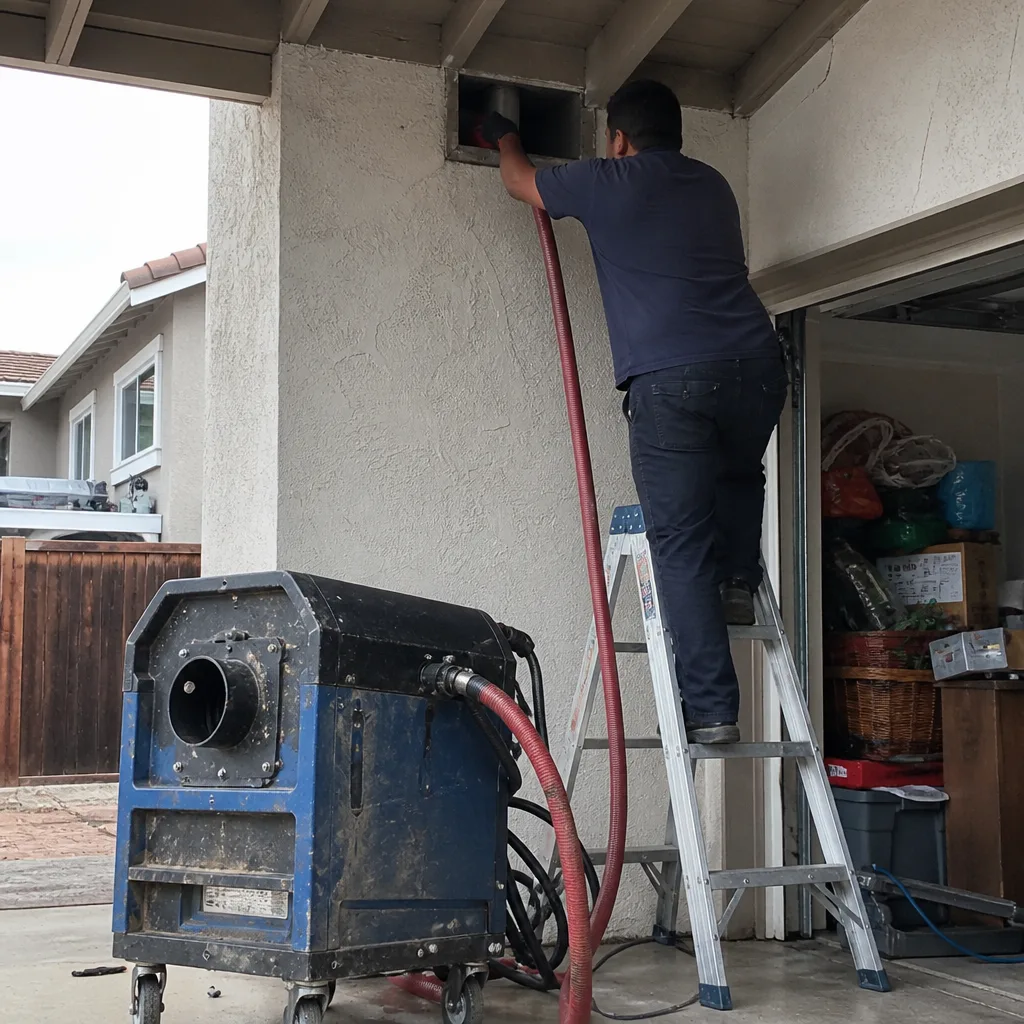 Before
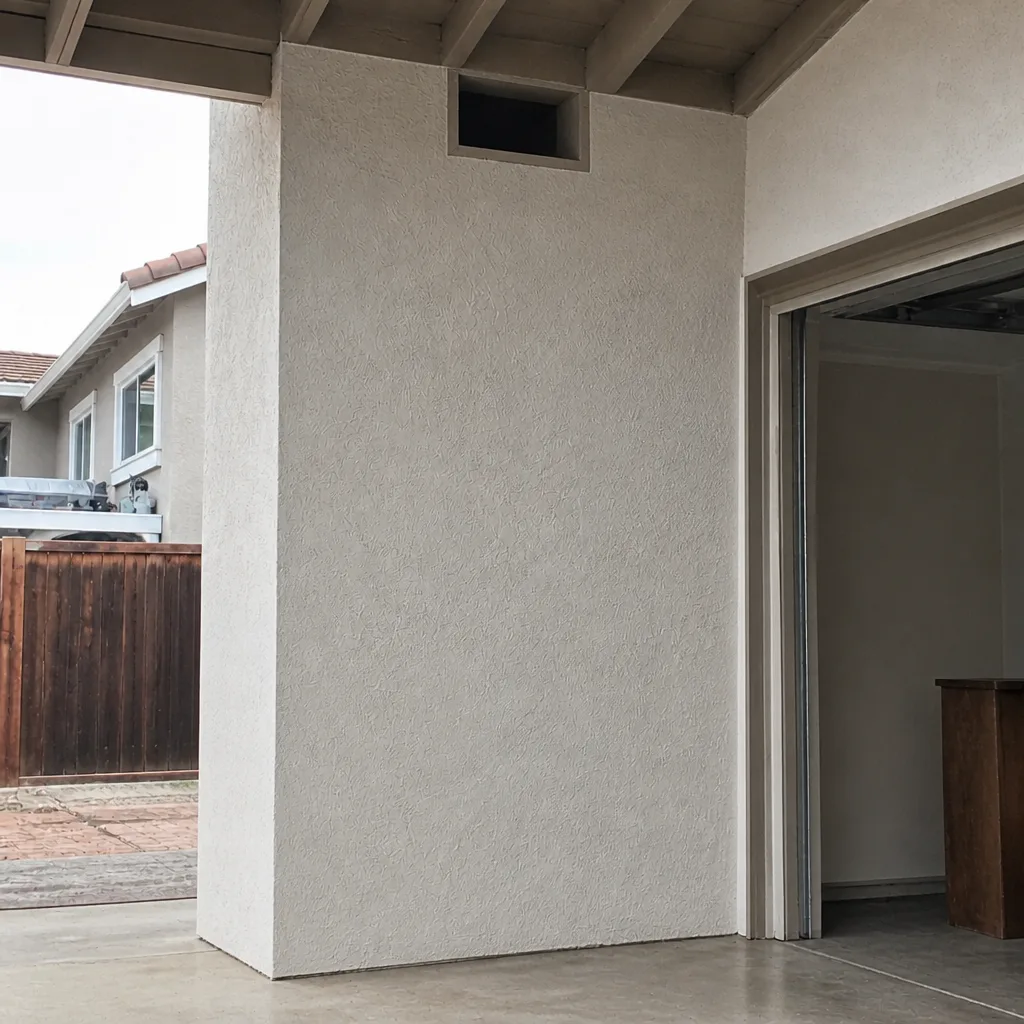 After
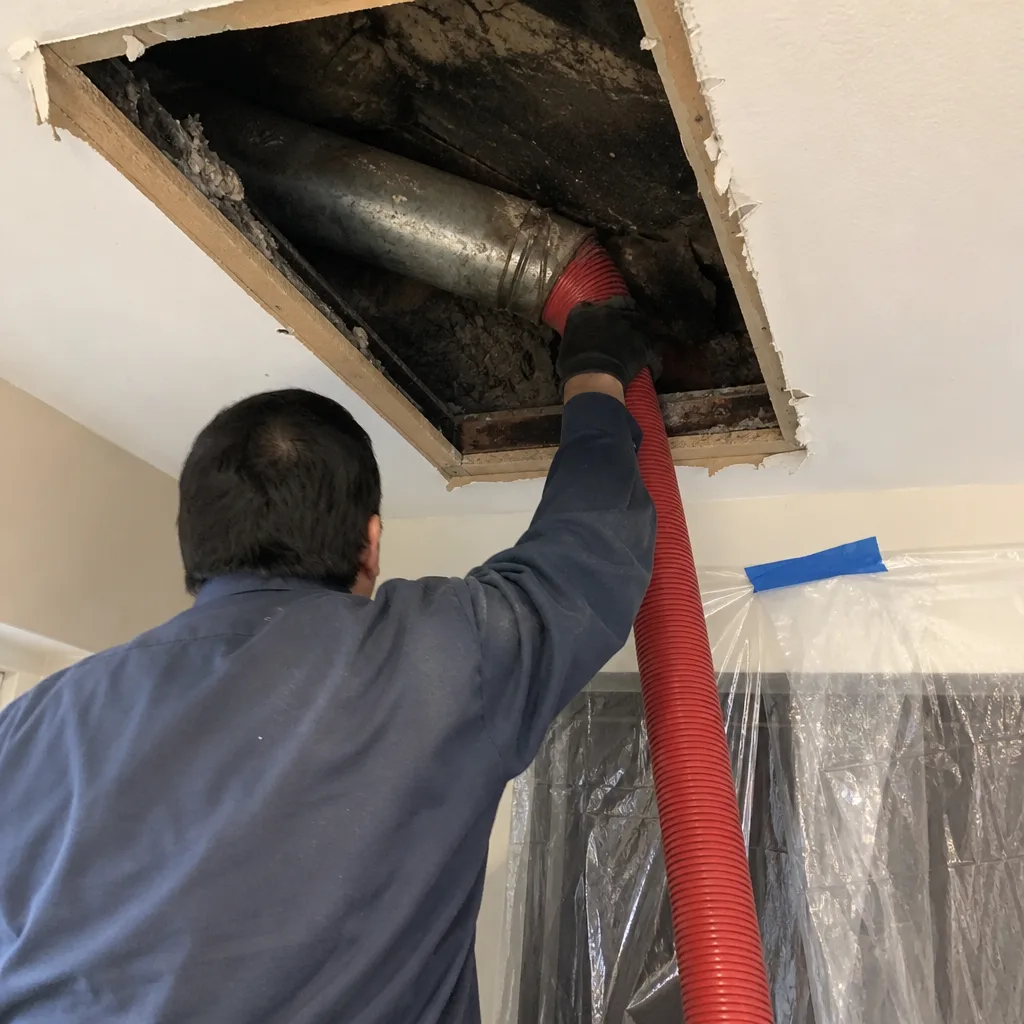 Before
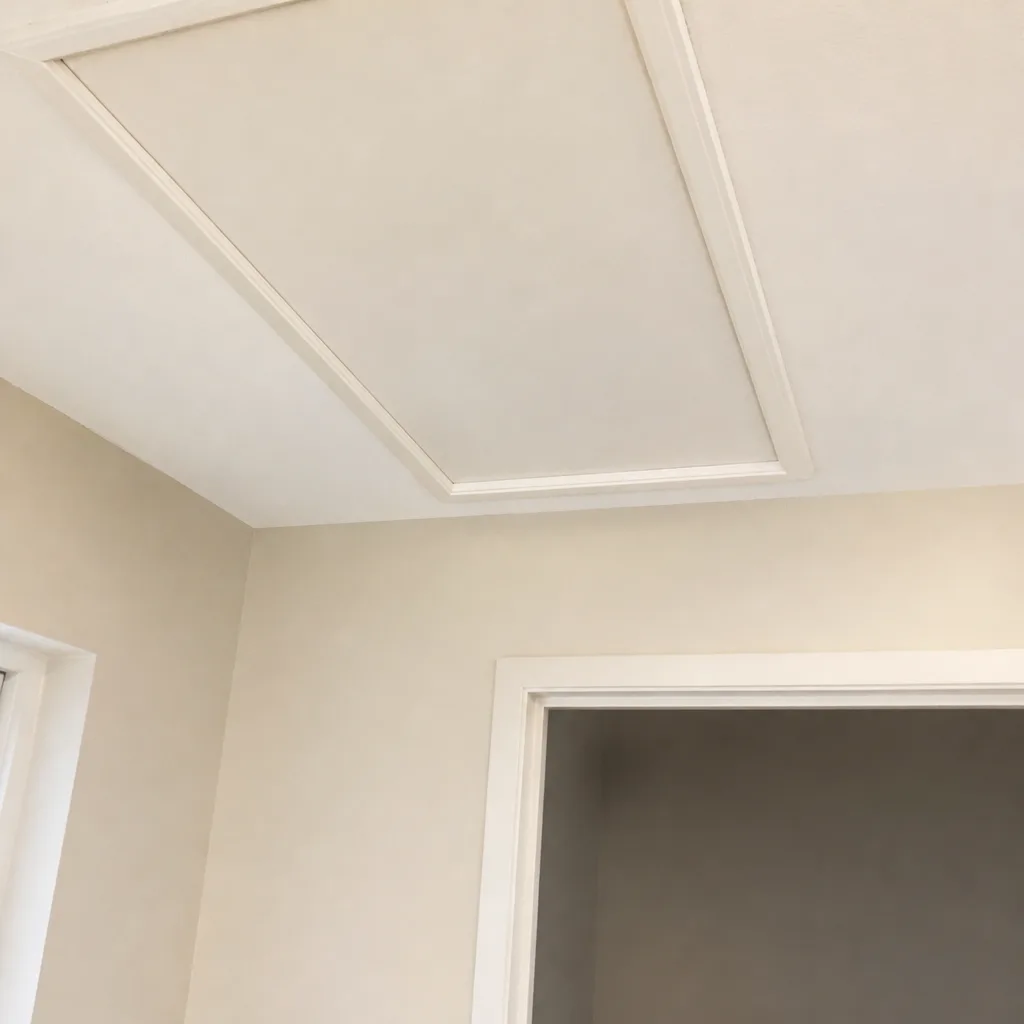 After
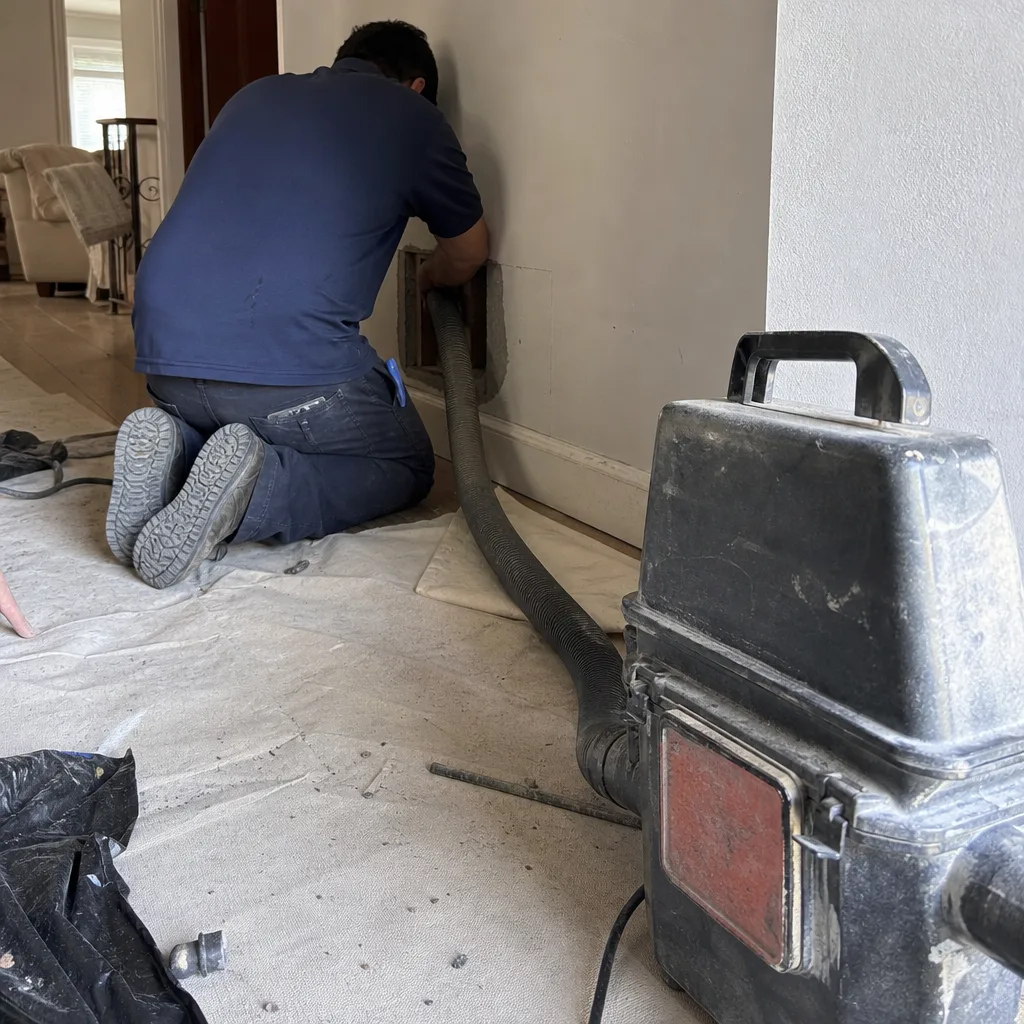 Before
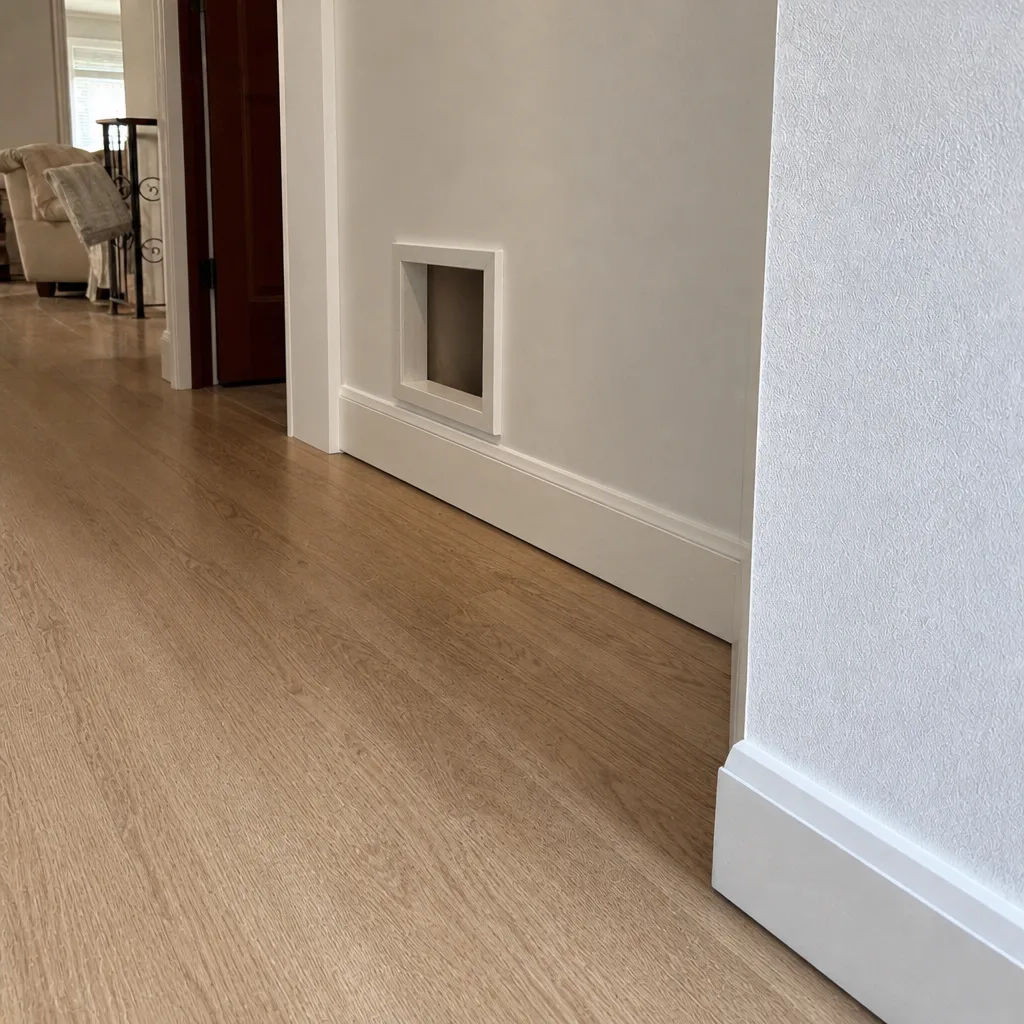 After
Common Mistakes to Avoid
- Booking on price alone. The lowest quote is a signal about scope, not skill. Compare the listed components before you compare the number.
- Treating “licensed and insured” as a quality signal for the cleaning. California doesn’t license duct cleaners. Verify insurance separately; ask equipment and containment questions for the rest.
- Skipping the scope of work. A verbal quote and a signature on a tablet leaves you no document. Insist on a written scope with named components and a flat price.
- Booking before the equipment question. If a contractor can’t name their rotary brush and their vacuum, the job will be an air-whip pass whether or not they say so.
- Sanitizing a system that hasn’t been cleaned. Sanitizer sitting on top of debris does nothing. Cleaning first, sanitizing second, as a documented final step.
- Ignoring repair and sealing in the scope. In South Coast Metro’s older housing stock, disconnected runs and unsealed boots are common. Cleaning without repairing means the dust comes back through the same gap.
- Not asking for before-and-after photos of your own system. Generic stock images don’t prove anything. Your own ducts, your own photos, that’s the verification.
When to Call a Professional
Some airflow problems are worth watching; others are worth booking a professional now. Call us when you notice a persistent musty or stale smell coming from a supply register, visible dust streaking from a vent, or a sudden drop in airflow in one room that doesn’t resolve after changing the filter. If anyone in the household has started waking up congested or with irritated sinuses and you can’t trace it to a seasonal trigger, a full system evaluation is reasonable. So is noticing that your energy bill has crept up without a change in how the house is used – that can signal leaks in the supply runs, which cleaning alone won’t fix.
Two more triggers: recent renovation or water damage in the home (drywall dust and moisture both find their way into ductwork), and a move into a property where you don’t know the last time the system was cleaned. Air Duct Cleaning South Coast Metro offers free estimates in South Coast Metro – call (833) 468-5980. We answer 24/7. Fast dispatch from 7am to 7pm, Sunday through Friday.
Frequently Asked Questions
Whole-system duct cleaning in South Coast Metro typically falls in a range set by square footage, the number of supply and return registers, and how accessible the runs are – not by a per-vent rate. A written estimate for the full scope is the number to compare against other quotes. Call (833) 468-5980 for a free estimate – it’s the easiest way to get a real number for your system.
No. California doesn’t require a specific state license for duct cleaning, which means the contractor’s equipment, credentials, and written scope are the only quality controls you have. Verify NADCA membership and EPA 608 certification independently, and ask for a certificate of insurance before booking.
Cheap quotes usually reflect a smaller scope – accessible trunk lines only, or an air-whip method that doesn’t reach branch runs – rather than a discount on the same work. Ask each contractor to list exactly what’s included and what’s excluded. When the scopes match, the prices tell a very different story.
Before-and-after photos of your own ducts are the answer. Ask for them in the scope of work, not as a courtesy. A contractor using rotary-brush cleaning with containment can show you the interior of each cleaned run and the duct wall condition before and after.
There’s no universal interval. Most homes benefit from an evaluation every few years, moved forward if you notice symptoms – musty odors, uneven airflow, unexplained congestion, or a recent renovation. Homes with pets, a smoker, or anyone with respiratory sensitivities usually benefit from more frequent evaluation. If it’s been years and nothing is wrong, you’re not overdue.
Duct cleaning addresses the supply and return ductwork itself. HVAC cleaning goes into the air handler, blower, coil, and cabinet – the equipment that moves and conditions air. Duct repair and sealing addresses gaps, disconnects, and crushed runs that cause the cleaning to be undone. A full-system evaluation should look at all three, and if a contractor offers only the first, ask who’ll handle the rest. Call (833) 468-5980 for a free estimate that covers all three.
The Bottom Line
Duct cleaning in South Coast Metro has no state license requirement, no code standard for method, and no inspection you can fall back on. That puts the vetting burden on you, and it’s a lighter load than it sounds: verify NADCA membership and EPA 608 certification independently, ask which rotary-brush system and which vacuum the crew will use, confirm containment, and insist on a written scope of work that names every component with a flat price and before-and-after photos. Per-vent pricing and cheap base prices aren’t quality signals – they’re signals about scope. Get the scope document right and the job follows.
Air Duct Cleaning South Coast Metro works with Rotobrush and Nikro cleaning systems, Abatement Technologies containment equipment, and Honeywell and Aprilaire air quality products for the upgrade path after the clean. Our technicians have up to 8 years of experience, and we offer free estimates for homes and commercial spaces throughout South Coast Metro. Call (833) 468-5980. We answer 24/7. Fast dispatch from 7am to 7pm, Sunday through Friday.
Written by the team at Air Duct Cleaning South Coast Metro.