
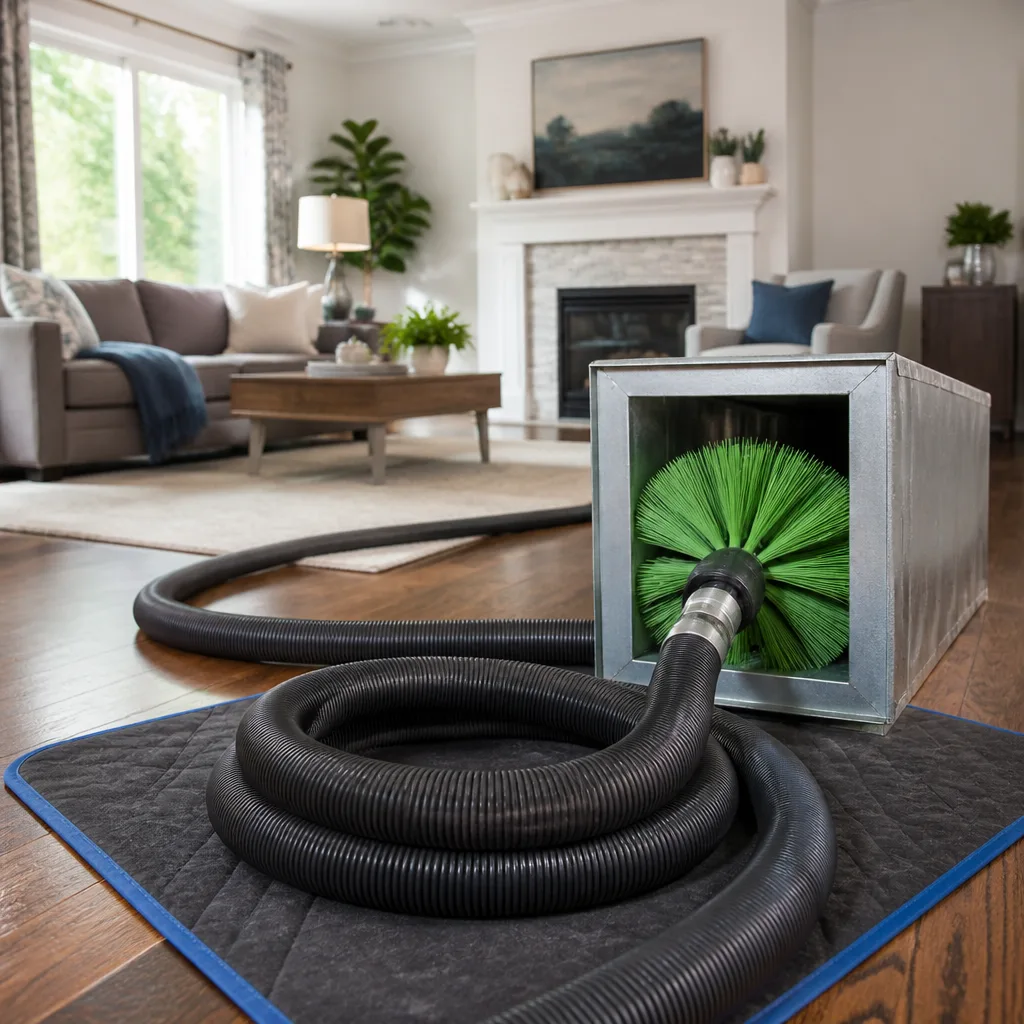
 Whole-home duct cleaning
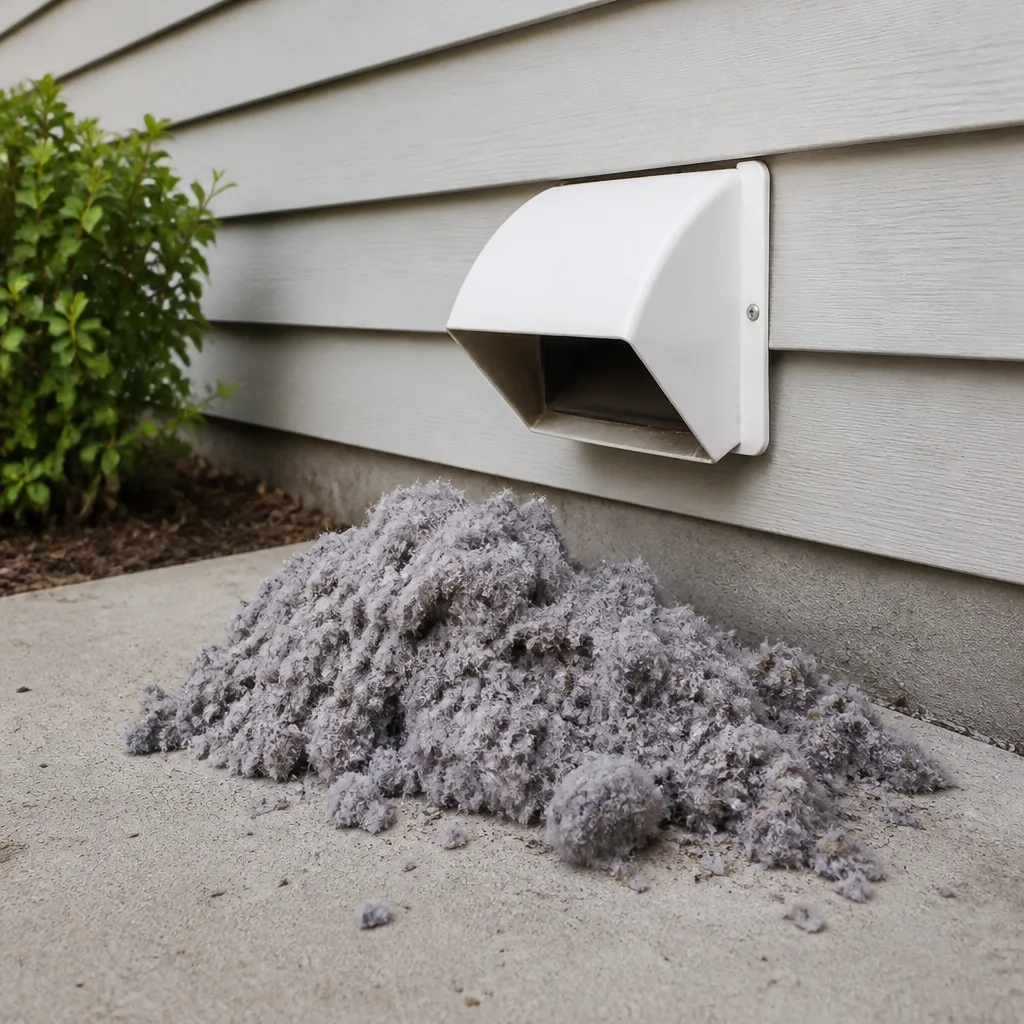 Dryer vent cleaning
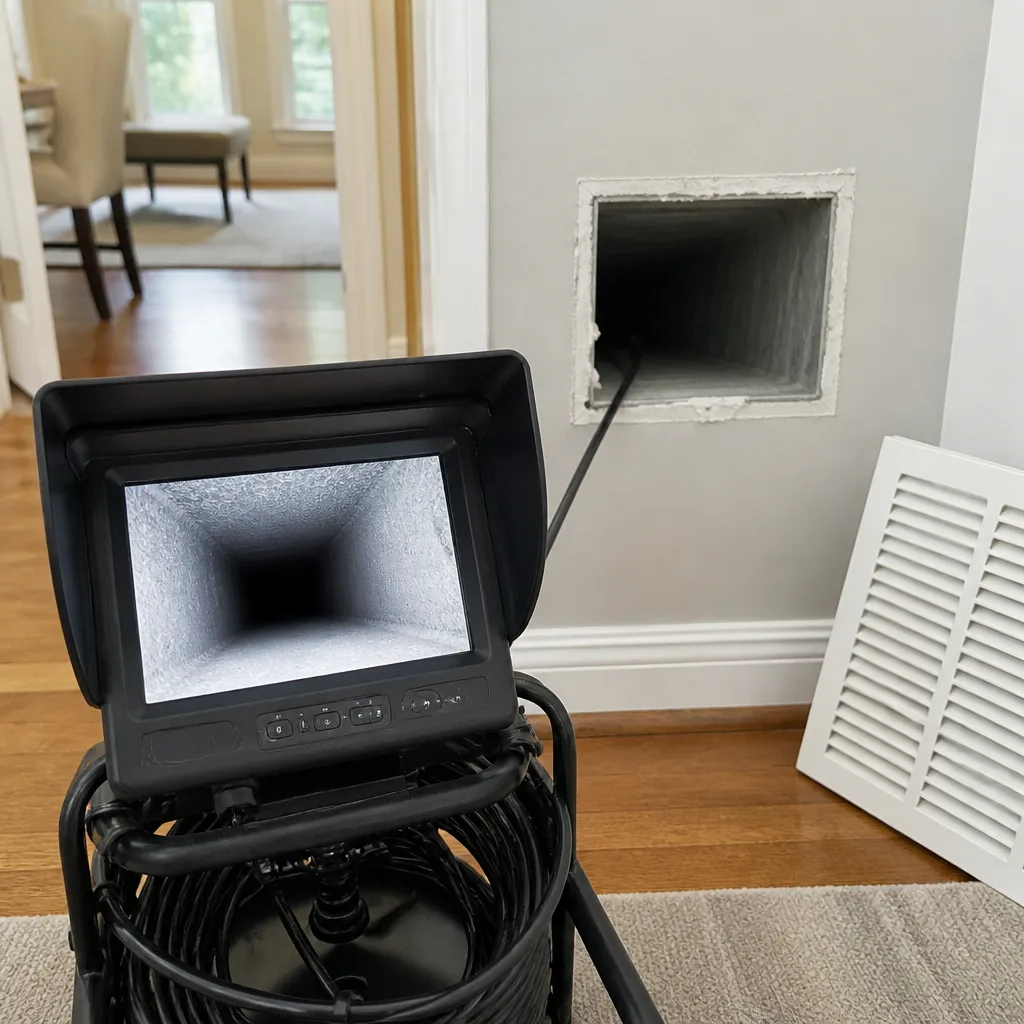 Camera inspection
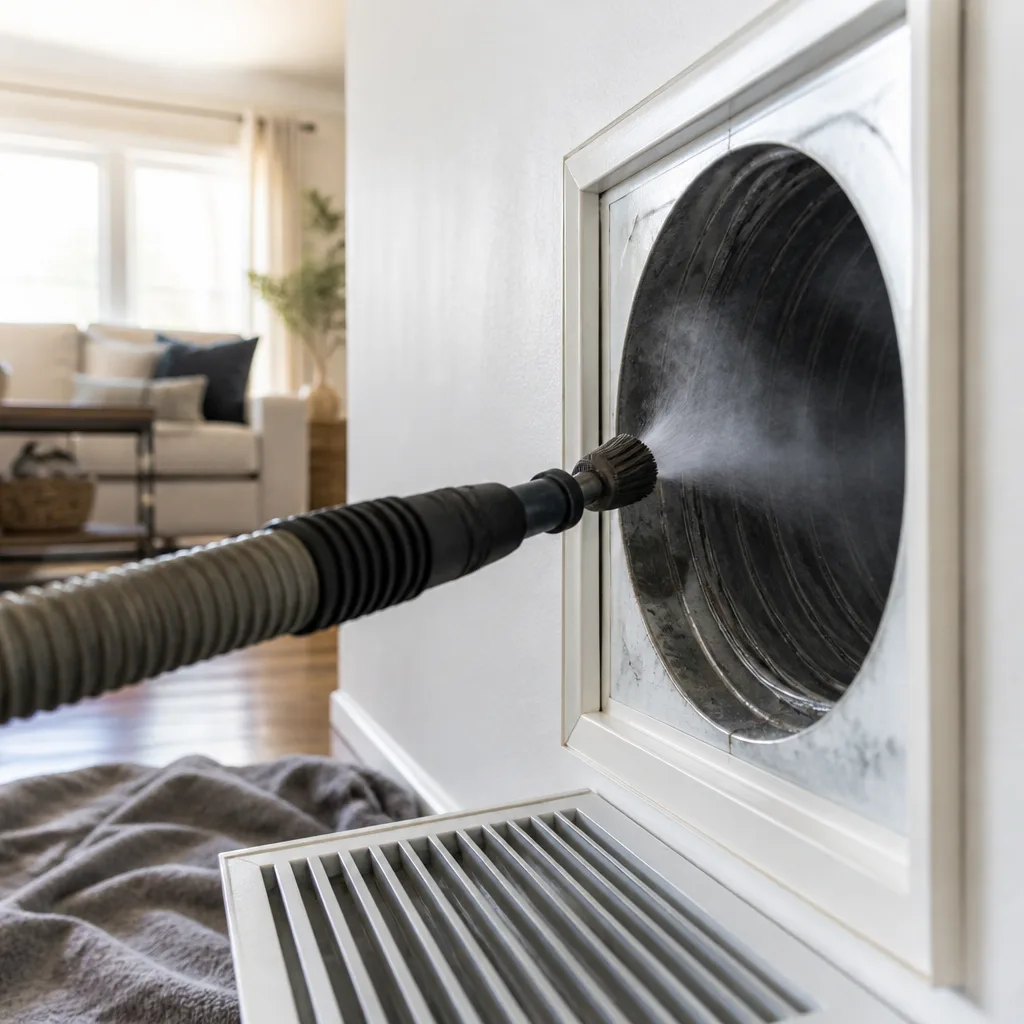 Sanitizing & deodorizing
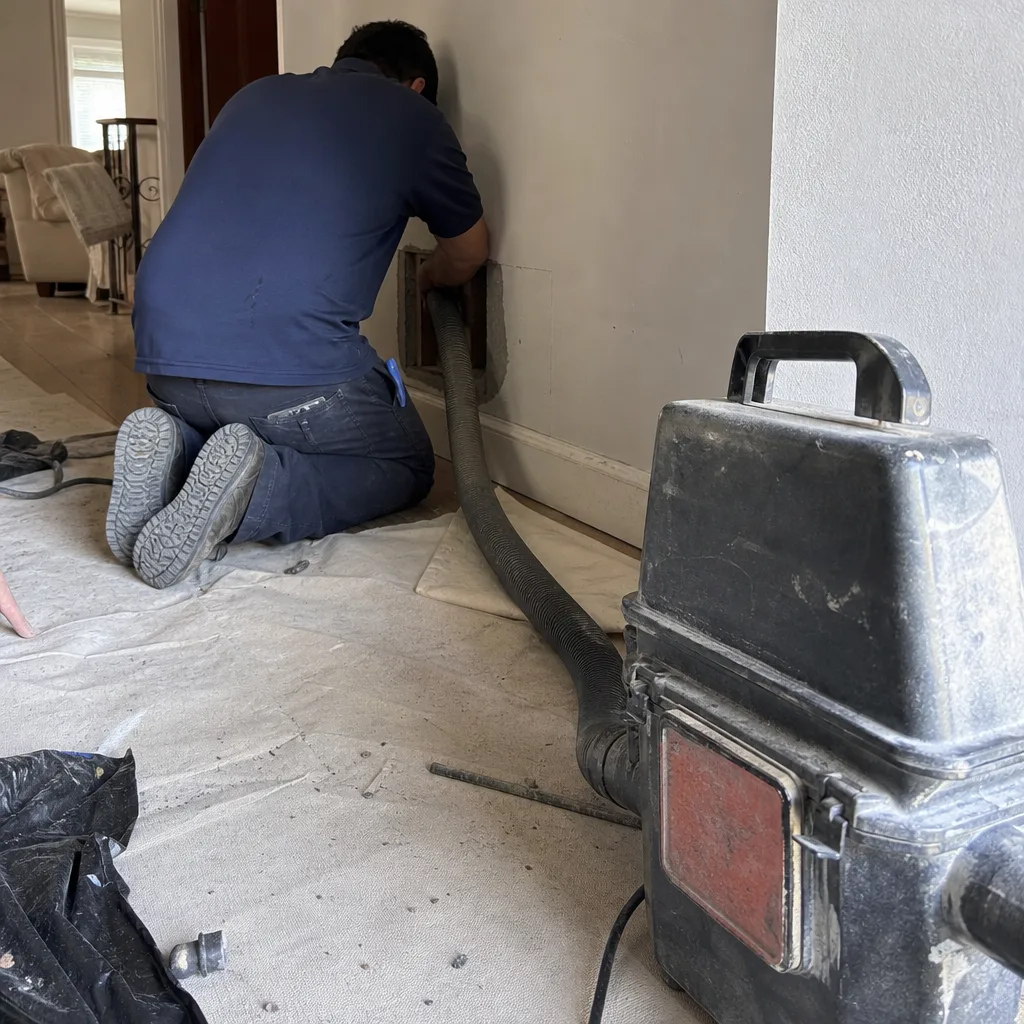
Whole-system duct and dryer vent check with before-and-after photos - you see exactly what came out of your vents
That "$99 whole-house special" is a bait ad - the real number appears once they are in your hallway, or the "clean" is a shop-vac at the register. We photograph the inside of your ducts before and after instead.
Why South Coast Metro Homeowners Choose Carrier Air Duct Cleaning
We provide independent Carrier air duct cleaning and service in South Coast Metro, and we build every Carrier job around the parts of the system that set Carrier apart: the cased A-coil, the blower wheel, and the return trunk feeding them. What makes our Carrier work different is that we map what we find to the equipment you actually own instead of treating duct cleaning as a one-size service. Carrier variable-speed air handlers run on pressure and airflow settings that punish any leak or restriction, so we inspect before we clean and seal what we find.
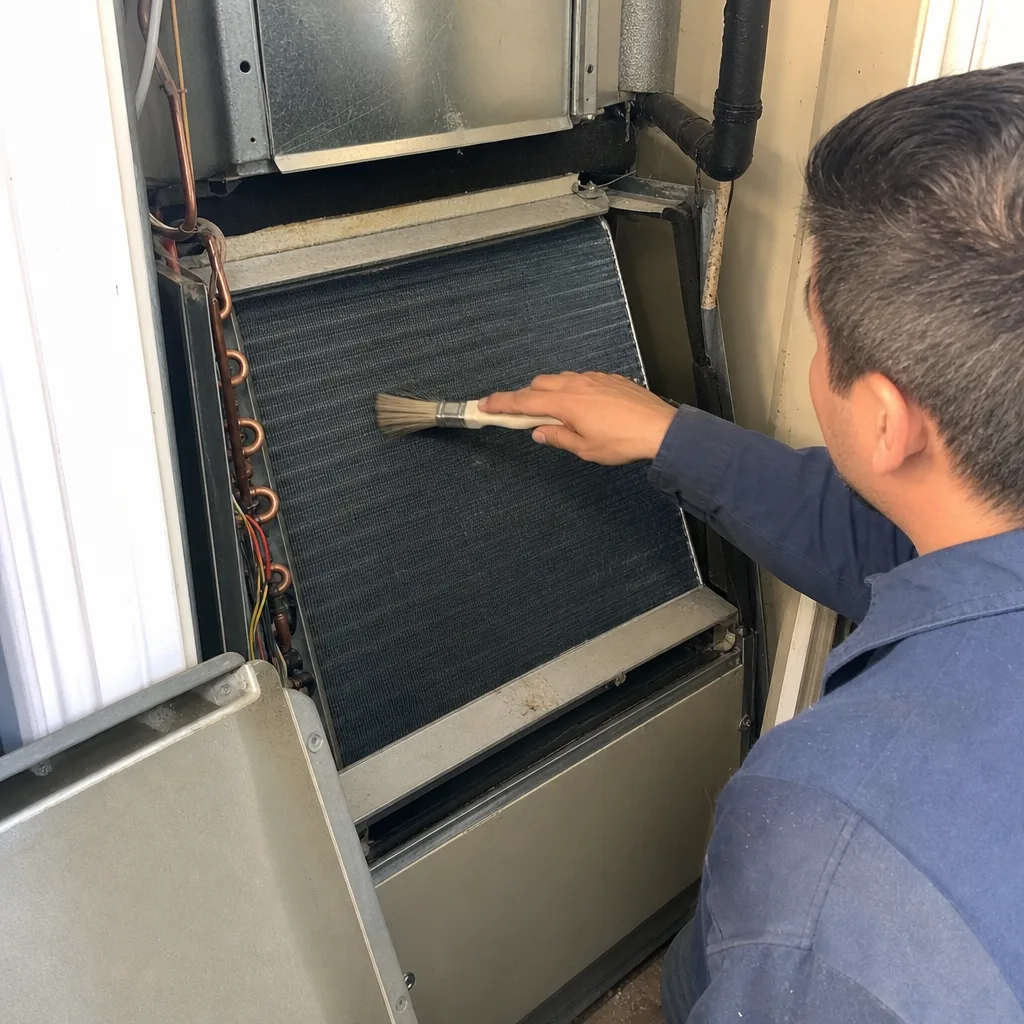
Our technicians have up to 8 years of experience with Carrier equipment across the generations still running in this area.
We are an independent Carrier service provider. We’re not affiliated with, endorsed by, or authorized by Carrier, and we don’t claim to be a dealer. We work on all Carrier vintages, from older PSC-blower furnaces to current variable-speed air handlers.
Call (833) 468-5980. We answer 24/7. Fast dispatch from 7am to 7pm, Sunday through Friday.
Why Trust Air Duct Cleaning South Coast Metro for Your Carrier Air Duct Cleaning?
Carrier equipment has its own airflow logic. Infinity series systems and the Performance series (24ANB/25HNB and 24ACC/25HPA outdoor units paired with matching air handlers) run variable-speed blowers that sense static pressure and ramp up when they hit resistance. A technician who doesn’t know that will clean a duct system, leave a crushed flex run in place, and hand you a system that still sounds like it’s straining. Our technicians read the pressure side of a Carrier job first.
We fit Carrier OEM coils, blower wheels and gaskets when replacement is truly needed. Those are the parts where fit and material matter most, and where a low-grade substitute shows up as a leaky cabinet or a coil that loads back up within a season. For filter upgrades and sealing work, quality aftermarket materials are the right call and we say so.
Warranty safety is a real concern on Carrier systems. Nothing we do involves opening the sealed refrigerant circuit or altering the factory cabinet, so a cleaning, sealing or sanitizing job on a covered unit shouldn’t create a warranty problem. We note what we did so the record is clear if a claim ever comes up.
Across South Coast Metro, that combination of equipment familiarity and honest materials is what we’d want on our own Carrier system.
Styles & brands we work with
- Whole-home duct cleaning
- Dryer vent cleaning
- Camera inspection
- Sanitizing & deodorizing
Common Carrier Air Duct Cleaning Problems We Fix in South Coast Metro
Carrier equipment fails in recognizable patterns. Here’s what we see most in South Coast Metro and why it happens.
- Variable-speed air handlers losing airflow. Infinity and Performance systems with FE4/FV4 air handlers draw high static pressure when the evaporator coil and blower wheel load with dust. Airflow drops, the ECM blower ramps up to compensate, and the system runs longer and louder. That ramp-up is the symptom most homeowners notice first.
- Cased A-coils matting over. Carrier’s cased A-coils in horizontal attic installs collect condensate and dust on the underside. The combination forms a mat that restricts return airflow and can support microbial growth. In South Coast Metro’s humidity, that mat comes back faster than it would inland.
- PSC-blower furnaces tripping on high limit. Older Carrier 58STA/58MCA furnaces with standard PSC blowers often have undersized return ducts. When lint accumulates on the blower wheel and secondary heat exchanger fins, the unit trips the high-limit switch. The fix isn’t a bigger filter; it’s a clear return path.
- Kinked or sagging flex runs. Flexible supply runs are common in South Coast Metro attic installs. They kink or sag at fittings, and Carrier’s higher-static variable-speed systems expose those leaks as pressure loss and room-to-room imbalance.
- Return-trunk restriction feeding it all. A Carrier system is only as good as what feeds it. A clogged return plenum upstream of a clean coil still starves the blower. Video inspection of the return and supply trunks tells us where the real restriction sits before we clean.
The South Coast Metro angle is one a generic Carrier page never covers. The marine layer keeps humidity elevated much of the year, and the 405 and I-5 corridors load the air with traffic exhaust. Together they leave a sticky, soot-like residue on duct walls that standard vacuuming won’t pull off. Homes within a half-mile of the 405 have duct dust with a distinct black carbon signature, and it settles faster than ordinary household dust. Older tract homes in South Coast and Mesa Verde often still have original galvanized steel ducts that trap debris and corrode, while the high-rises near South Coast Plaza run complex vertical duct systems with fire dampers that need specialized cleaning access. In practice, that means Carrier systems in South Coast Metro may need attention roughly twice as often as the same equipment inland in Irvine or Santa Ana.
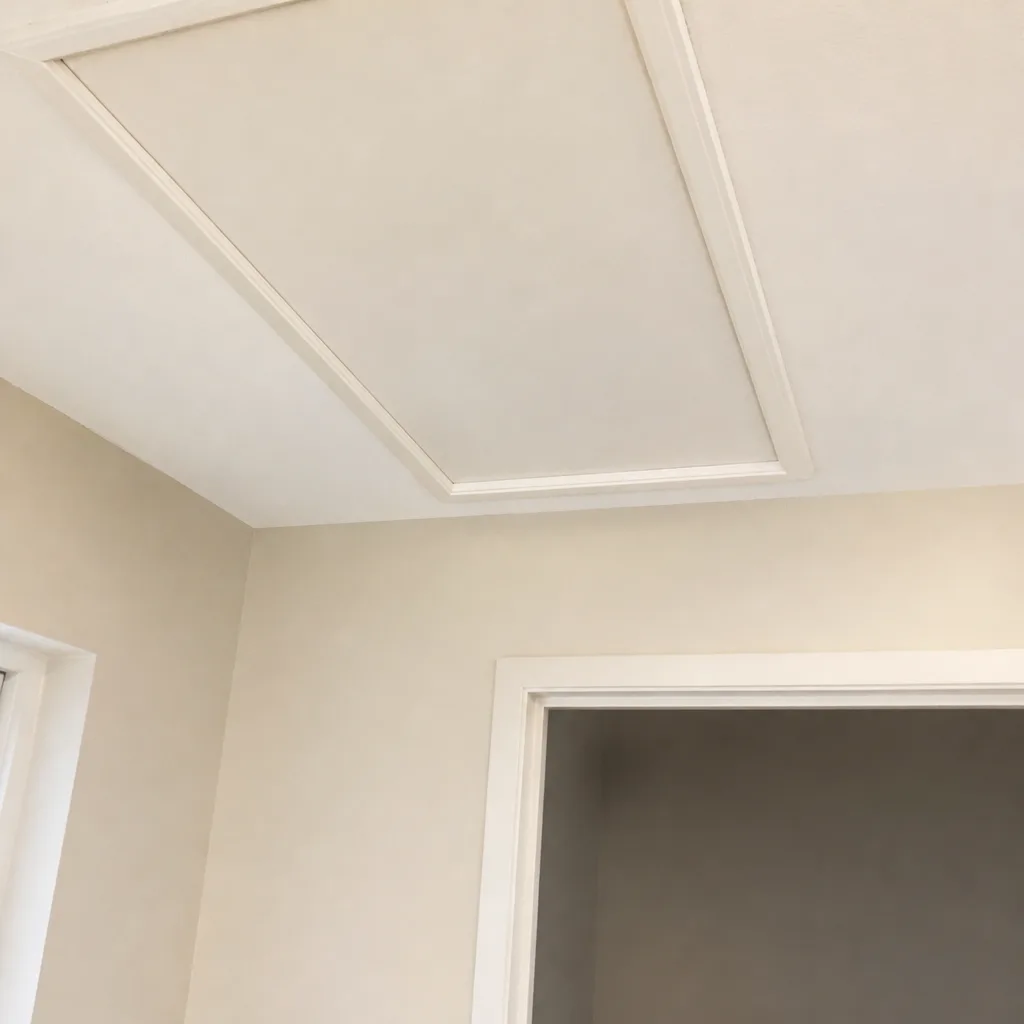
See the difference
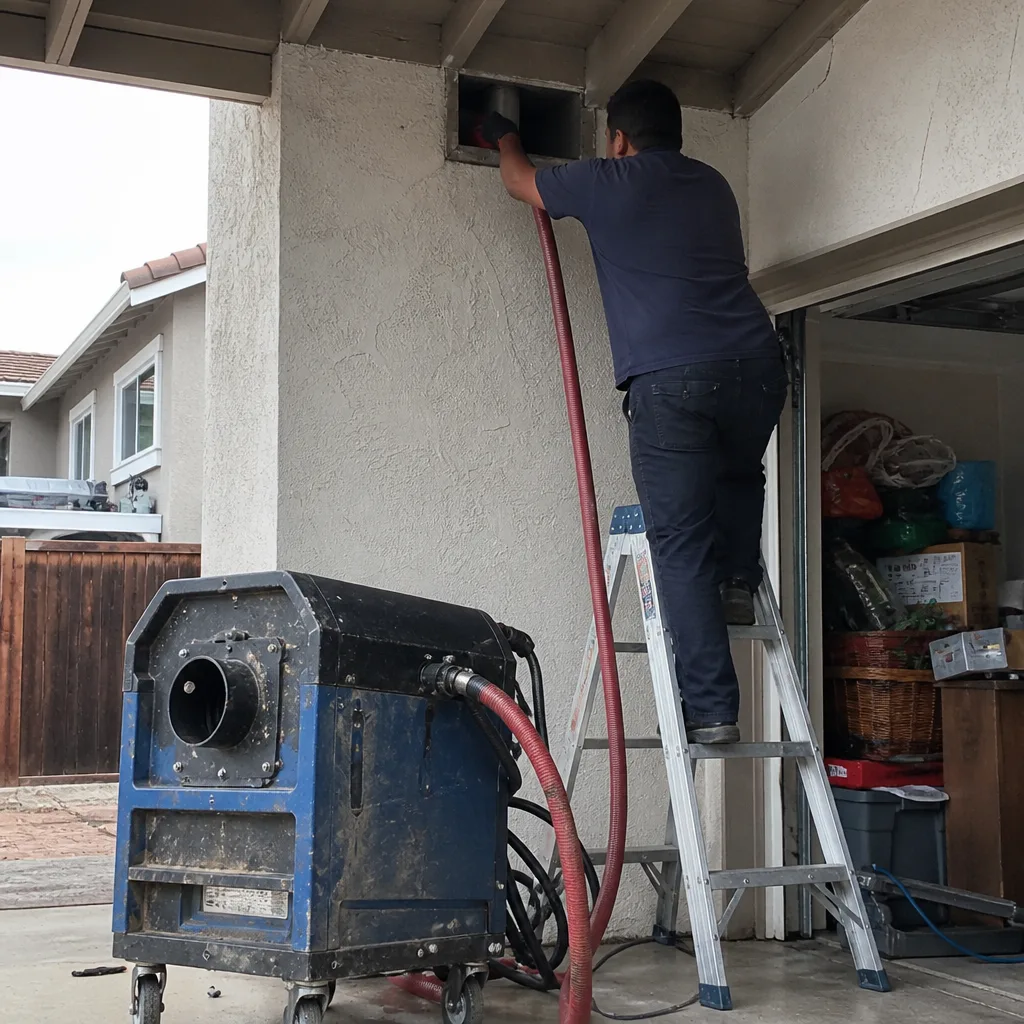 Before
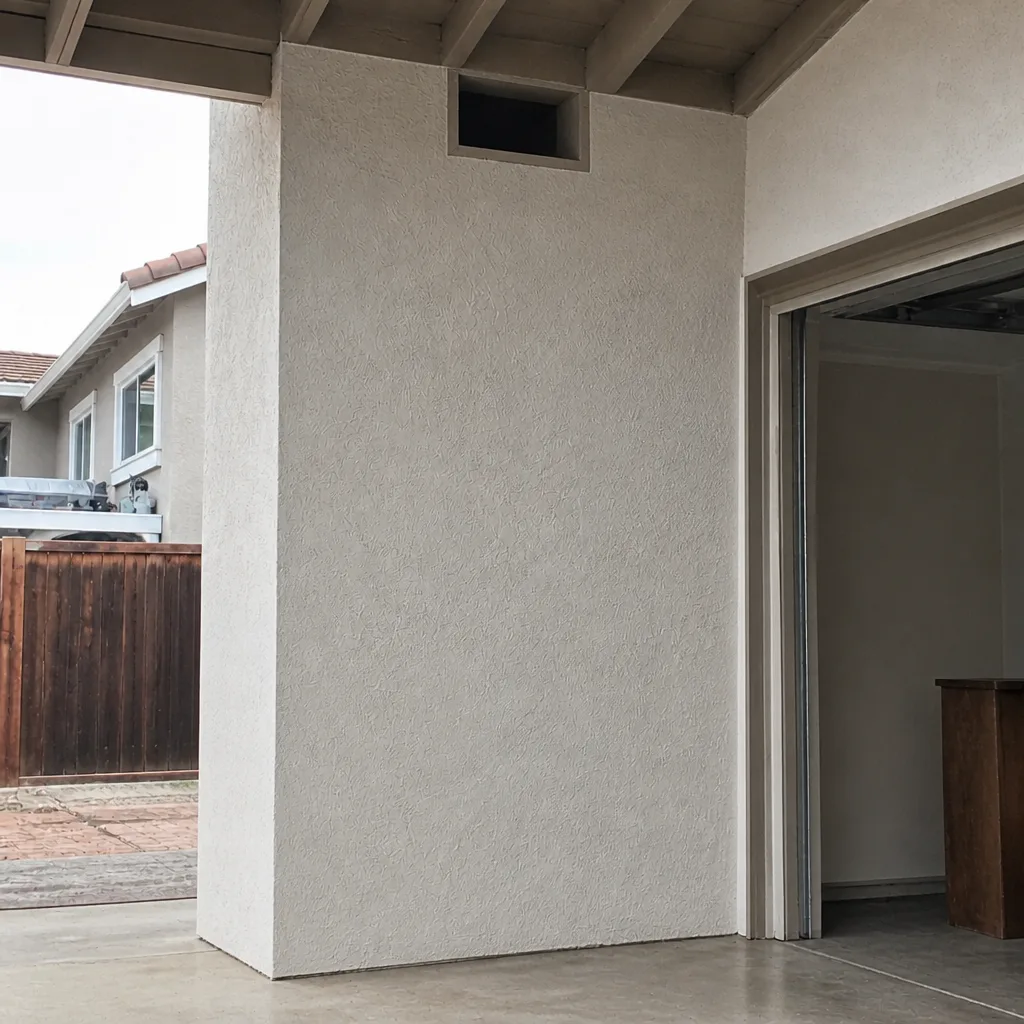 After
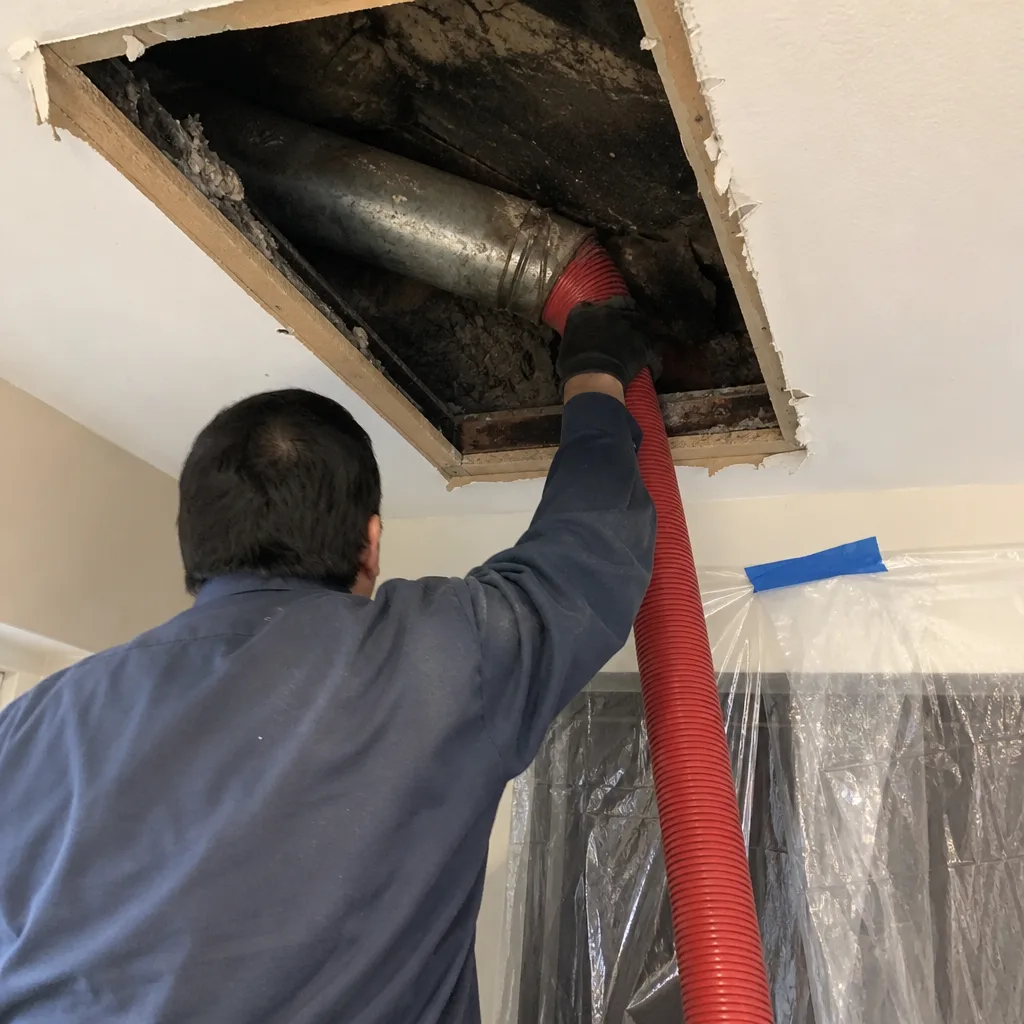 Before
 After
 Before
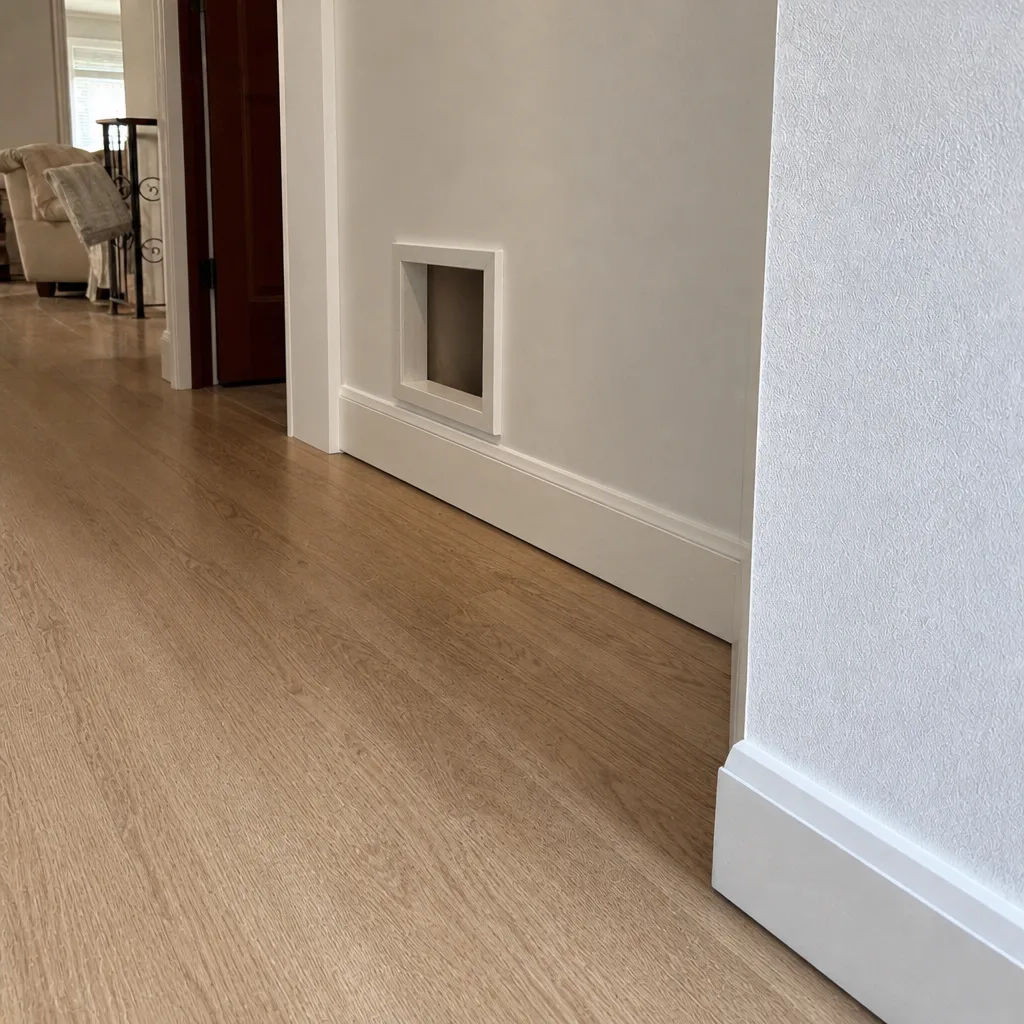 After
Carrier Parts & Our Repair-vs-Replace Approach
Parts decide whether a Carrier clean and repair holds. We use Carrier OEM coils, blower wheels and gaskets when a part genuinely needs replacing, and quality aftermarket filters and mastic sealants for service work. We don’t order genuine Carrier stock under false pretenses, and we don’t substitute a cheap coil that doesn’t fit a Carrier cabinet. Fit and material are the whole point.
The repair-vs-replace call on a Carrier system usually comes down to one of two things. A clogged coil or blower is almost always cleanable, and cleaning it restores airflow without touching the refrigerant circuit. A rusted or crushed cased coil, or a failed ECM blower module, is different: that’s a real part replacement, and the decision should weigh the unit’s age and its refrigerant type against the cost of the part. We put those numbers side by side and let you decide.
When cleaning will resolve the problem, we’ll say so. Call (833) 468-5980 for a free estimate.
Our Carrier Service Process – Step by Step
A Carrier job runs in a set order. Skipping a step is how a system ends up half-fixed.
- 1
Diagnosis with video inspection. We run a camera through the return and supply trunks and inspect the evaporator coil, blower wheel and cabinet. On Carrier variable-speed systems we also check static pressure readings against how the blower is responding.
- 2
Repair or install. Based on what the inspection shows, we clean the cased A-coil and blower, seal kinked flex runs and cabinet leaks, or install or replace the part that’s actually failing. OEM Carrier parts where fit matters.
- 3
Test. We recheck airflow and static pressure after the work to confirm the blower is no longer ramping to compensate. A Carrier system that was straining before should run quieter and shorter after.
- 4
Warranty and record. We document what was cleaned, sealed or replaced, and answer any carrier warranty questions before we leave.
A typical Carrier Infinity or Performance job with a variable-speed air handler often shows up as weak airflow and a blower that sounds like it’s working harder than it should. A qualified local pro usually starts with a video inspection of the return and supply trunks, pulls the blower, cleans the cased coil and wheel, and seals any flex-duct leaks found along the way. On Carrier horizontal attic coils, the job often includes clearing the condensate pan and treating the coil to stop the mat from returning.
Carrier Products We Service & Install in South Coast Metro
We service Carrier equipment across the generations still running in South Coast Metro. That includes var