
Last updated November 24, 2026
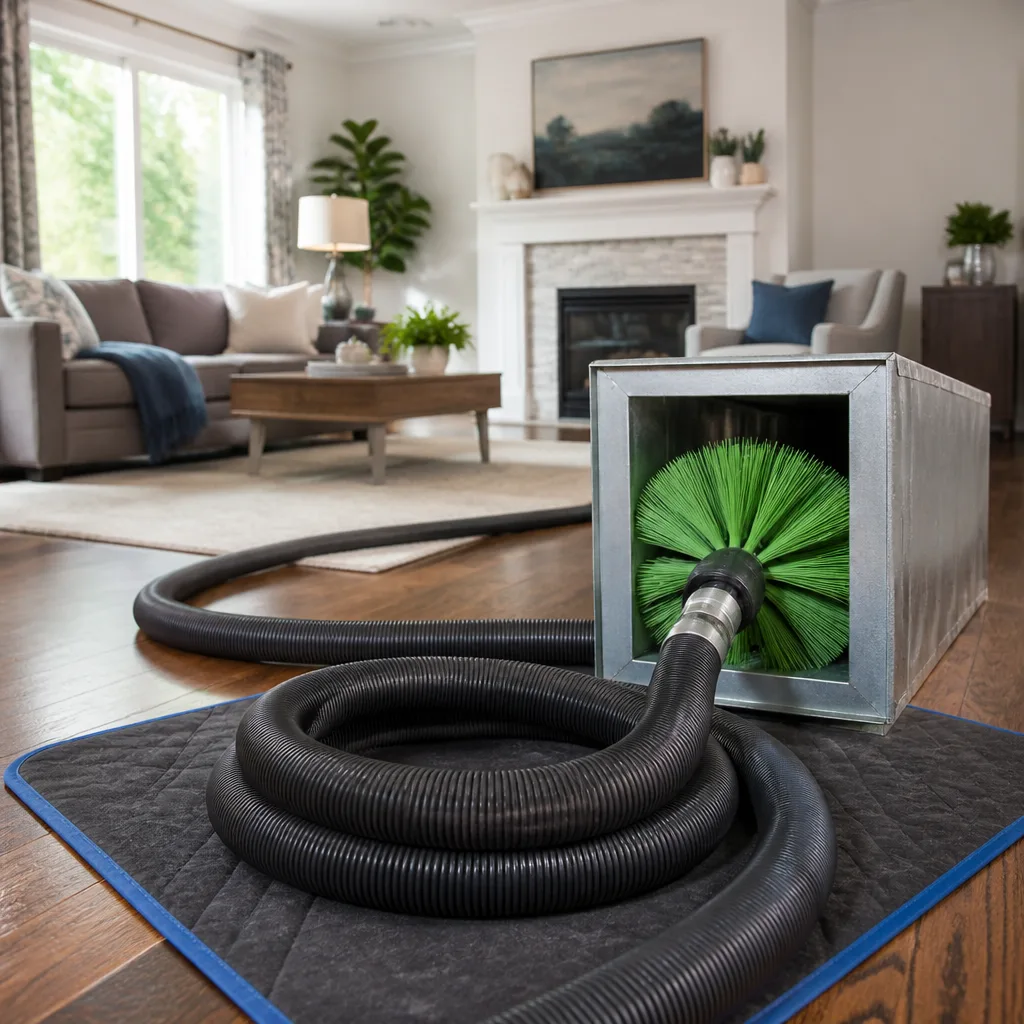 Whole-home duct cleaning
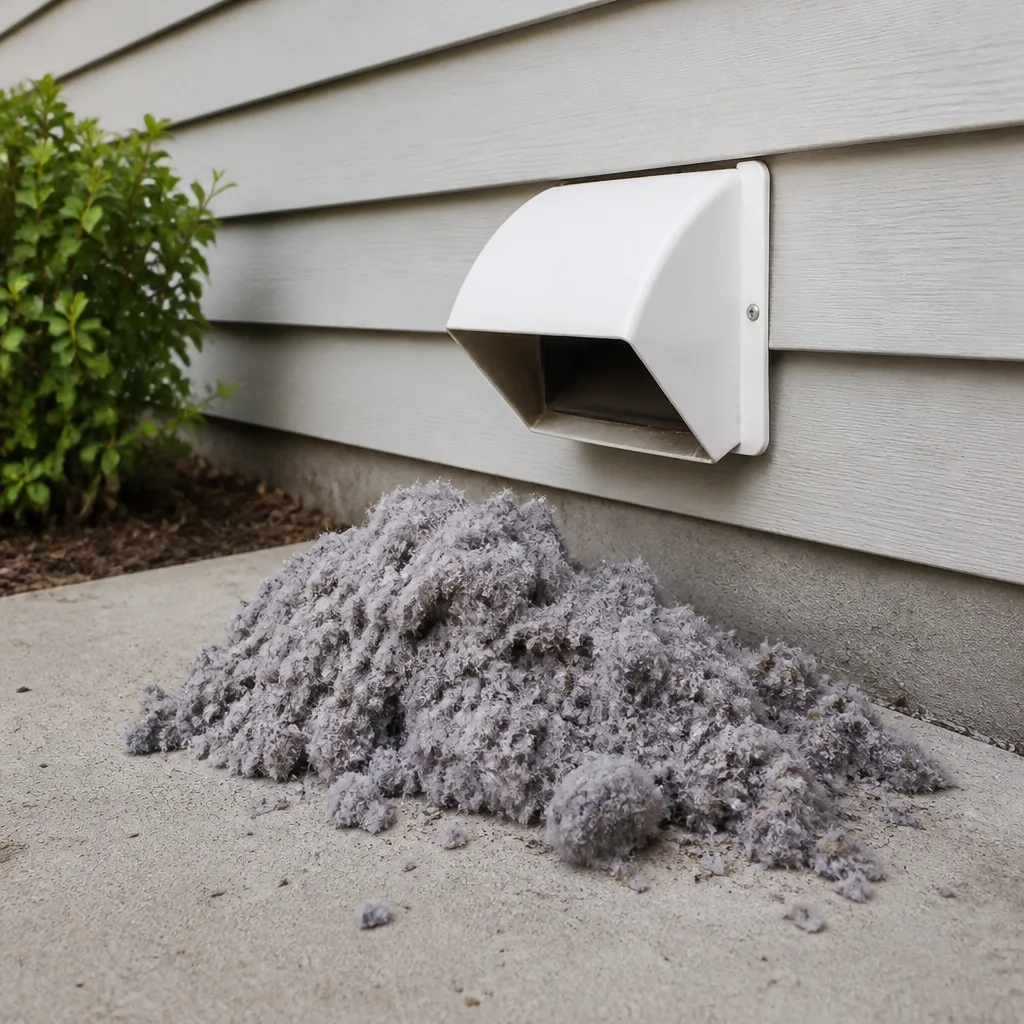 Dryer vent cleaning
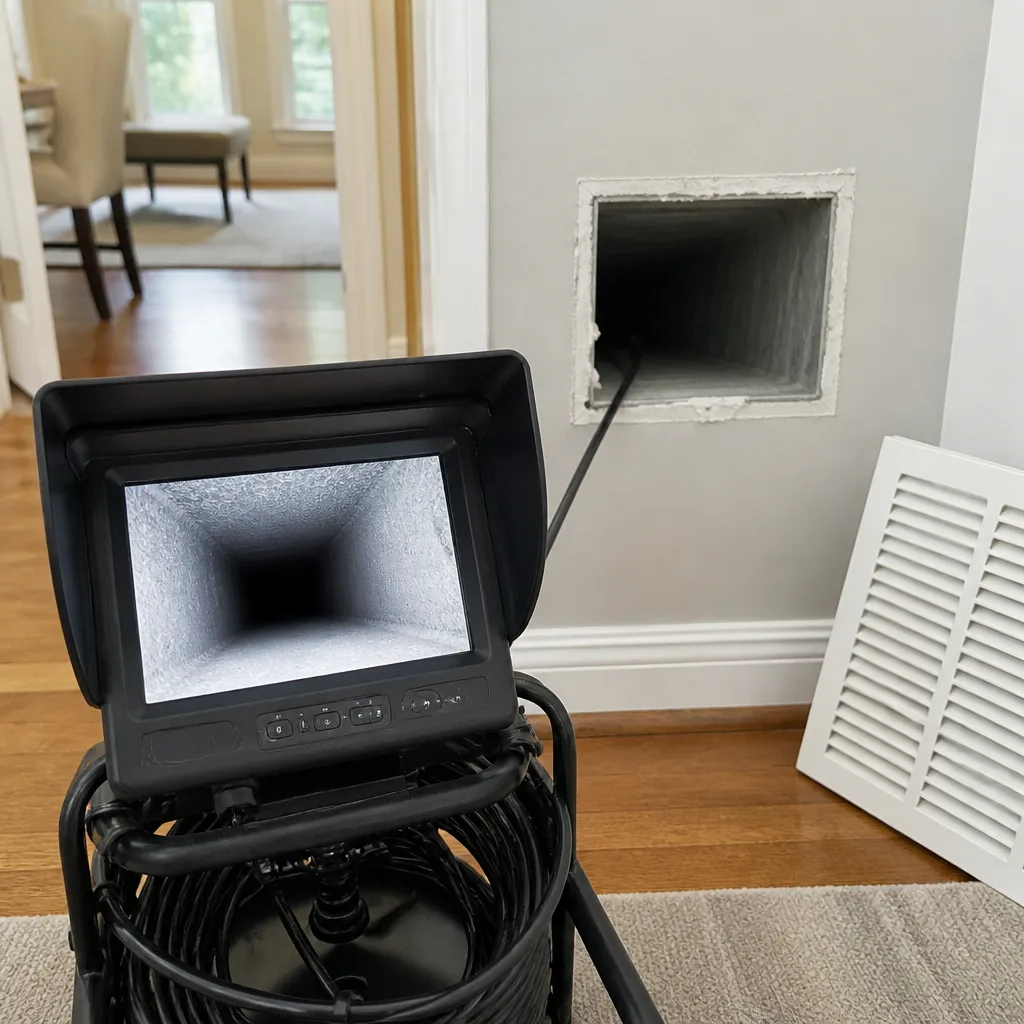 Camera inspection
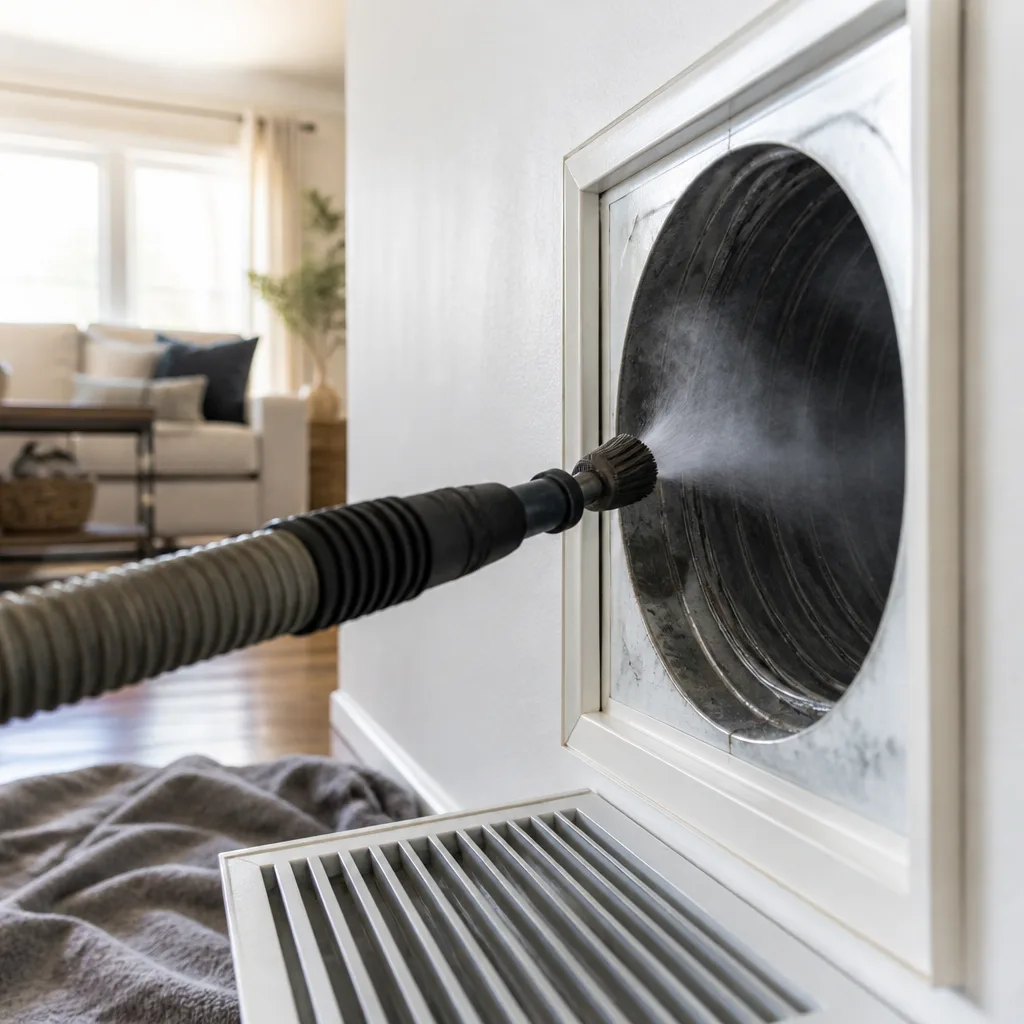 Sanitizing & deodorizing
Whole-system duct and dryer vent check with before-and-after photos - you see exactly what came out of your vents
That "$99 whole-house special" is a bait ad - the real number appears once they are in your hallway, or the "clean" is a shop-vac at the register. We photograph the inside of your ducts before and after instead.
The Complete Guide to Air Duct Cleaning in South Coast Metro
Most duct cleaning quotes describe a job that cleans the trunk line and stops there. That leaves the majority of the surface area in your system untouched. Dust doesn’t settle only in the straight run you can see from the basement stairwell or the hallway return. It packs into flex branches, coats the plenum, and blankets the evaporator coil. A job that skips those zones looks finished because the visible ducts shine. The hidden parts keep cycling debris back into your rooms.
We’ve seen this pattern countless times in South Coast Metro, where the climate keeps systems running almost year-round. This guide maps the entire HVAC pathway end to end, explains what a complete cleaning actually involves, and shows you how to read a verification report, because the gap between what’s advertised and what’s performed is where most homeowners lose money.
Quick Answer
Air duct cleaning in South Coast Metro involves cleaning every component of the HVAC pathway, not just the trunk lines. That includes return grilles, flex branch runs, supply boots, the plenum, and the air handler cabinet. A complete job uses rotary-brush contact cleaning, HEPA containment, and a post-cleaning verification report that documents each zone before and after. If a quote only mentions “ducts” without naming these components, it’s likely an air-whip blowout that leaves the dirtiest parts untouched.
Styles & brands we work with
- Whole-home duct cleaning
- Dryer vent cleaning
- Camera inspection
- Sanitizing & deodorizing
Table of Contents
- Why Coastal Climate Makes Duct Contamination Worse Here
- The Five Zones of an HVAC Pathway
- What NADCA ACR Standards Actually Require
- The Air Handler and Evaporator Coil: The Forgotten Components
- How a Complete Cleaning Works: Step-by-Step
- How to Read a Post-Cleaning Verification Report
- Duct Repair and Sealing: Fixing What Cleaning Reveals
- Common Mistakes to Avoid
- Frequently Asked Questions
Why Coastal Climate Makes Duct Contamination Worse Here
South Coast Metro sits in an unusual zone. The Pacific influence keeps outdoor humidity higher than most of inland California, and that humidity does something specific to the inside of a duct system: it keeps surfaces just moist enough to support biological growth and dust mite populations.
Inland homes in Riverside or the high desert run hot and dry. Dust there tends to stay dry and loose, which means it can be vacuumed out relatively easily. In South Coast Metro, dust arrives on supply boots and coil fins slightly damp. Over months, that damp dust cakes, films, and binds to the surface. It becomes a food source. The inside of a poorly maintained duct system can support dust mite activity because the mites need exactly what this climate provides: moderate warmth, elevated humidity, and a steady supply of organic particles.
What does that mean for you? Three practical consequences:
- Dust that has bound to duct surfaces cannot be removed by vacuum alone. It needs rotary-brush contact cleaning to break the bond.
- Humidity cycling means mold spores have a more favorable surface to colonize in the plenum and on the evaporator coil, both of which stay damp during the cooling season.
- Systems in South Coast Metro run longer each year than in colder climates, which means more air cycles through the same contamination and more opportunity for particles to re-enter living spaces.
This is why we treat the entire HVAC pathway as one contamination system rather than a collection of separate ducts. The humidity doesn’t respect the boundary between a flex branch and the plenum. Neither should the cleaning. If you’ve been noticing musty odors when the system starts, that’s often the first sign that moisture-driven contamination is present. Our air duct cleaning South Coast Metro service is built around the whole pathway for exactly this reason.
The Five Zones of an HVAC Pathway
A technician who cleans only the trunk lines and calls it done has cleaned roughly 40% of the surface area where debris actually accumulates. The rest lives in flex branches, plenums, and the air handler itself. Here’s the pathway broken into five zones, and which ones low-bid crews typically skip.
- Return grilles and registers. The entry point. These are visible and usually the only thing a homeowner can see, so they get cleaned first and sometimes only. Low-bid crews do clean these. It’s easy and looks like progress.
- Return trunk and plenum. The main channel between the grilles and the air handler. Accumulates a significant share of debris because all return air passes through it. Often only partially cleaned because the plenum is hard to access without proper containment equipment.
- Air handler cabinet and evaporator coil. The dirtiest components in the system and almost never included in a standard quote. This is where air is filtered, cooled, and pushed back out. Wet coil fins trap dust, and the cabinet interior collects everything the filter misses.
- Supply trunk and plenum. The distribution channel from the air handler outward. Debris here gets blown directly into rooms, which is why this zone matters even when it isn’t the dirtiest.
- Flex branch runs and supply boots. The final run to each register. Flex duct has a corrugated interior that traps debris in the ridges. Low-bid crews skip these because rotary-brush cleaning each branch takes time and contact cleaning is the only method that removes material from the ridges.
In our experience, the difference between a low bid and a complete job comes down to zones 3 and 5. Those are the time-consuming parts and the parts you can’t see. If a quote doesn’t mention the air handler cabinet or flex branch cleaning by name, it’s describing a partial job at a partial price. Our air duct cleaning service covers all five zones as standard.
What NADCA ACR Standards Actually Require
NADCA ACR is the standard most duct cleaning companies reference in their marketing, but few quote it precisely. Understanding what it actually says helps you evaluate any quote you receive in South Coast Metro.
Once contamination is present and entry is required, the ACR standard sets out evaluation and cleaning requirements. Cleaning requires “source removal”: physically removing contaminants from the system, not sealing them, encapsulating them, or blowing them downstream. Source removal means contact cleaning of surfaces, HEPA-filtered vacuum collection, and containment so that nothing is redistributed into living spaces during the process.
The standard also requires that the cleaning process not damage the system and that components be cleaned as thoroughly as feasible given the access available. It emphasizes assessment before and verification after. That means a technician should be evaluating the system before starting and verifying conditions after, not just handing you a receipt.
Where most advertised “NADCA-certified” claims break down is in the equipment section. To meet source-removal requirements, you need rotary-brush contact cleaning, HEPA containment, and a collection system that captures what gets dislodged. Air-whip-only setups move debris around without collecting it. Consumer-grade vacuums attached to a hose cannot handle the volume or filtration requirements. That’s why we operate professional-grade Rotobrush and Nikro systems and Abatement Technologies negative-air and HEPA containment equipment, and it’s why we can tell you the exact machines running in your home rather than describing them as “state-of-the-art.”
For a full-service option that includes the mechanical side of the system, our HVAC cleaning service covers the air handler, coil, and plenum components that standard duct cleaning leaves out.
The Air Handler and Evaporator Coil: The Forgotten Components
If you took the collection pan from under an evaporator coil in a South Coast Metro home after three or four cooling seasons and examined the coil fins, you’d understand why we call this the dirtiest component in the system. Most standard duct cleaning quotes don’t include it. That’s a problem.
The evaporator coil sits inside the air handler cabinet. Air passes across its fins and gets cooled. Condensation forms on the fins during normal operation. Dust that reaches the coil sticks to the wet surface, dries between cycles, sticks again, and slowly builds a mat. That mat does two things: it restricts airflow, which makes your system work harder to move the same volume of air, and it provides a surface where biological growth can establish.
The air handler cabinet itself collects everything that bypasses or gets past the filter. Filter gaps around the frame, the blower wheel, and the cabinet interior all accumulate debris. A job that cleans ducts but skips the air handler has cleaned the path but not the source.
When we clean an air handler, the process involves:
- Setting up HEPA containment around the cabinet opening so nothing escapes into the utility space or living area.
- Cleaning the blower wheel and cabinet interior by contact method.
- Cleaning the coil fins using appropriate technique and products, without bending or damaging them.
- Verifying before-and-after condition photographically.
After the coil is clean, adding a proper filter setup or upgrading to a Honeywell or Aprilaire filtration product gives the system a better chance of staying clean. Cleaning without improving filtration is a reset, not a fix. For customers in South Coast Metro, we stock and install these products so the clean system has something holding the line afterward.
How a Complete Cleaning Works: Step-by-Step
A complete air duct cleaning follows a sequence because the order matters. If you clean the branches before the plenum, you re-contaminate them. Here’s how a full-pathway job runs, from inspection to verification.
- Pre-cleaning inspection. A technician assesses each of the five zones, checks the coil and air handler, identifies damaged or disconnected sections, and photographs existing conditions. This is where we find the disconnected flex branch behind the supply boot that’s been dumping air into the wall cavity for years.
- Containment setup. Negative-air containment using Abatement Technologies HEPA equipment is placed so the work area stays under negative pressure. Registers and returns get sealed off. Nothing enters your living space during the cleaning.
- Return-side cleaning. The return grilles, return trunk, and return plenum get contact-cleaned using the Rotobrush rotary-brush system with simultaneous HEPA vacuum collection. Brushes break the bond; vacuum captures the material.
- Air handler and coil cleaning. The cabinet, blower wheel, and evaporator coil are cleaned as described above. This is the step most quotes omit.
- Supply-side cleaning. The supply trunk, plenum, and each flex branch run get rotary-brush contact cleaning. Each branch is treated individually, not blown through from the trunk.
- Register and boot cleaning. Grilles and supply boots get removed, cleaned, and reinstalled.
- Sanitizing (where appropriate). After mechanical cleaning, an EPA-registered sanitizer is applied to surfaces that showed biological growth. This is the final layer, not a substitute for cleaning.
- Verification and report. Before-and-after photographs of each zone are compiled into a report you can review.
Our technicians have up to 8 years of experience running this sequence, and the schedule is realistic: this is a full-day job for a typical home, not a two-hour stop. If someone quotes you two hours for a whole-house job in South Coast Metro, they’re describing zones 1 and 2.
How to Read a Post-Cleaning Verification Report
A verification report is your proof the work happened. Most companies don’t provide one because most companies don’t do the work that would document it. Here’s what a real report should contain, and how to spot the difference between documentation and marketing.
- Before-and-after photographs of each zone. Not one photo of a shiny trunk line. At minimum, one photo per zone: returns, return plenum, air handler interior, supply plenum, and at least a sample of flex branches. Verify the photos are same-location pairs, not stock images.
- Containment documentation. Confirmation that HEPA negative-air equipment was used and where it was placed. A report without containment equipment photos is describing a different job.
- Condition notes. Any damage, disconnection, or degraded flex duct found during cleaning should be noted in writing, with photos. This is where duct repair and sealing recommendations should come from.
- Sanitizer details. If sanitizing was performed, the product used and the areas treated should be listed.
- Component checklist. Each of the five zones should be listed with a clean/inspected/skipped status. Skipped zones should have a reason noted.
What a report should not contain: a single “we cleaned your ducts” line on an invoice, unverifiable claims about improved air quality, or photos that could have been taken in any home. Ask for the report before the job starts, and if you’re quoted a job that doesn’t include one, ask why. For South Coast Metro customers, this report is what makes the difference between a service you can verify and a service you have to take on faith. When you send photos of dirty duct interiors back to a homeowner alongside the after photos, the work speaks for itself.
Duct Repair and Sealing: Fixing What Cleaning Reveals
Cleaning a duct system often uncovers problems that no amount of cleaning can fix. Disconnected flex runs, gaps at plenum seams, crushed sections behind drywall, and torn duct insulation are all common findings in South Coast Metro homes. Sealing those gaps matters for two reasons: energy loss and re-contamination.
Leaky ducts lose conditioned air into unconditioned spaces and pull in dust, attic insulation particles, and outdoor air through the same gaps. A house that gets a perfect duct cleaning but leaves 20 disconnected joints will have a duct system that re-contaminates within a season. Cleaning without repair is a temporary reset.
Duct repair and sealing is a named service we offer for exactly this reason. When the cleaning inspection finds a problem, we can fix it as part of the same job rather than referring it out and having the customer coordinate another contractor. That means:
- Reconnecting separated flex branches and re-supporting sagging runs.
- Sealing plenum seams, boot connections, and register gaps.
- Replacing crushed or torn flex duct sections that can’t be cleaned effectively.
- Verifying the repair with post-repair photographs.
If a company cleans and doesn’t repair, they’ll document the problem and hand you a report. We’d rather fix it in the same visit. Separately, the dryer vent is a fire-prevention concern that shares nothing with duct cleaning except the equipment and the habit of neglect. Lint buildup in a dryer vent is a documented fire risk, and it’s why we treat dryer vent cleaning as its own service line rather than an upsell tacked onto a duct job. South Coast Metro homes with the dryer vent running through a long interior wall cavity benefit from having that line cleaned and inspected on its own schedule.
Common Mistakes to Avoid
- Accepting a quote that doesn’t include the air handler. If the air handler cabinet and evaporator coil aren’t mentioned in the scope, you’re getting zones 1 and 2 only. That’s a partial clean at a partial price, and the dirtiest part of the system is still dirty.
- Believing air-whip-only is sufficient. Air whips move debris without collecting it. In a coastal-humidity climate like South Coast Metro’s, that bound dust needs contact cleaning, not a pressure blast.
- Choosing the lowest bid without asking what equipment is used. Ask for the names of the machines. Rotobrush and Nikro are professional-grade contact cleaning and collection systems. If the answer is “our special vacuum,” ask for details.
- Skipping the verification report. If a company doesn’t offer before-and-after photos of each zone, they’re either not doing the work or not documenting it. Either way, you can’t confirm what you paid for.
- Cleaning without repairing. A duct system with disconnected flex branches and plenum gaps will re-contaminate quickly. Ask whether repair and sealing can be included.
- Spraying sanitizer instead of cleaning. Sanitizer is a final step after mechanical cleaning. It is not a substitute. A job that sanitizes without rotary-brush cleaning is fogging a surface that still has contamination bonded to it.
- Ignoring the dryer vent. It shares the equipment and the neglect cycle with your HVAC ducts but carries a fire risk that ducts don’t. Have it cleaned independently, especially if it runs through a long interior cavity.
See the difference
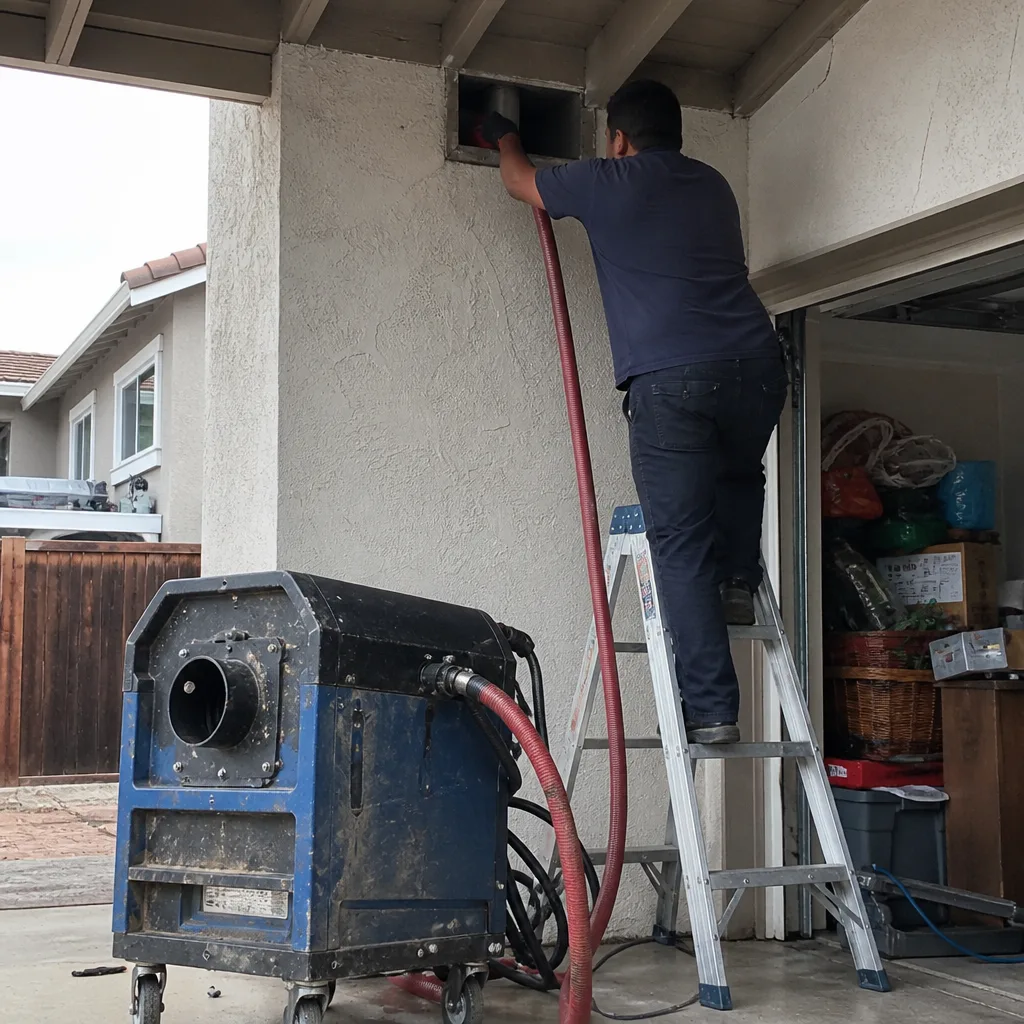 Before
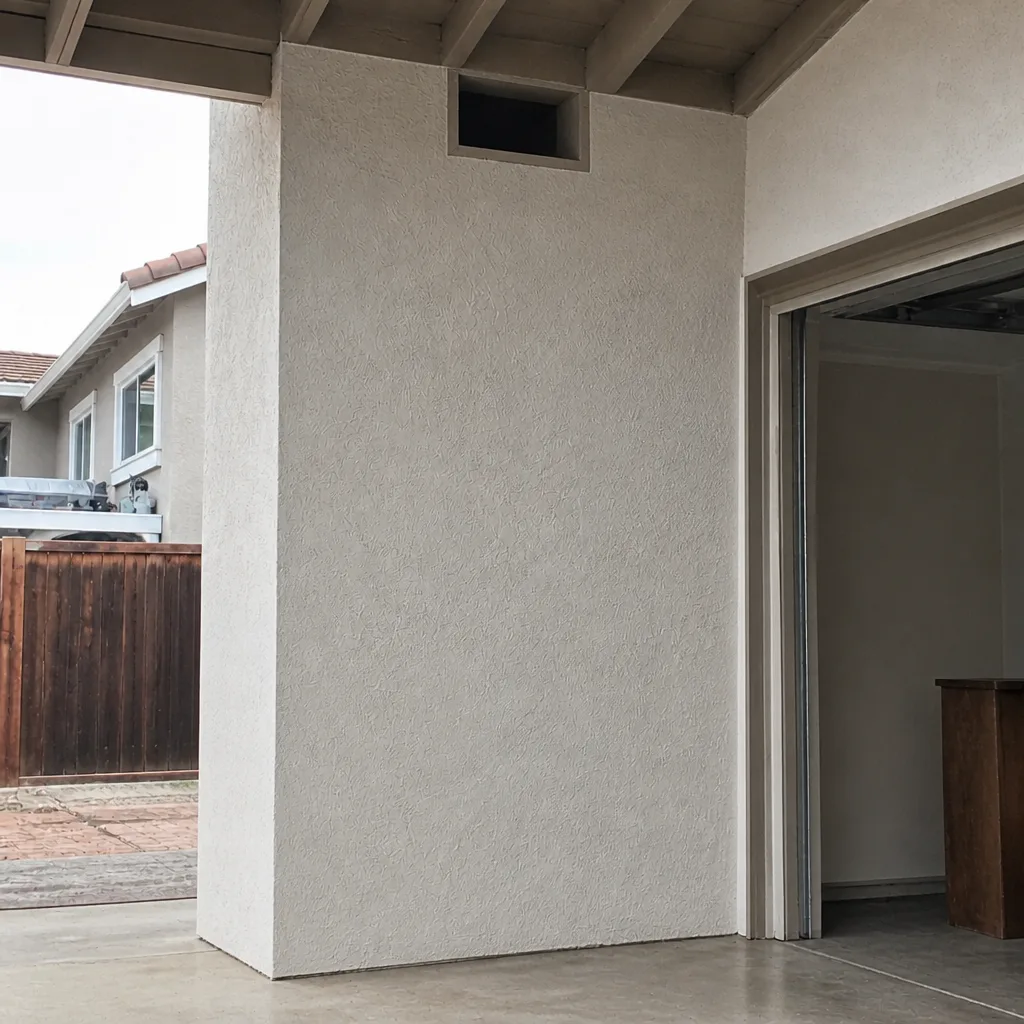 After
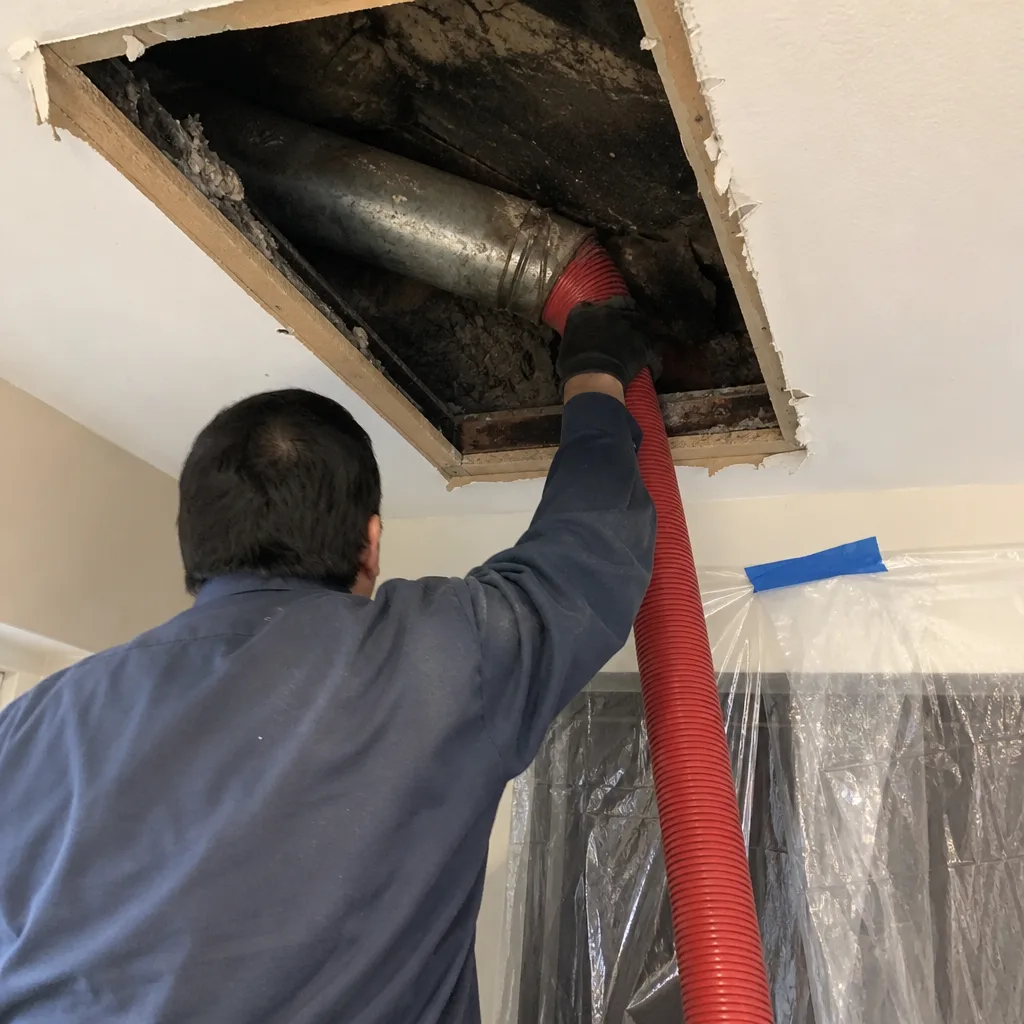 Before
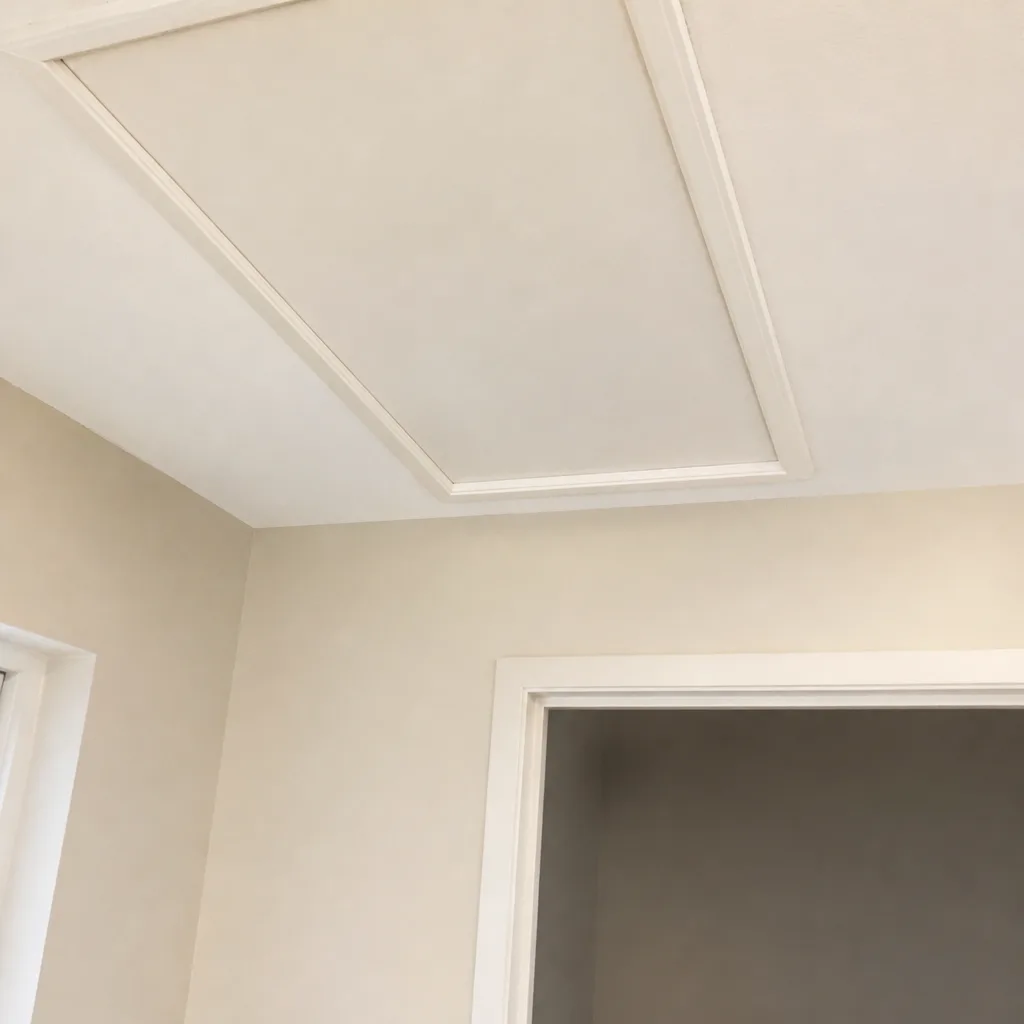 After
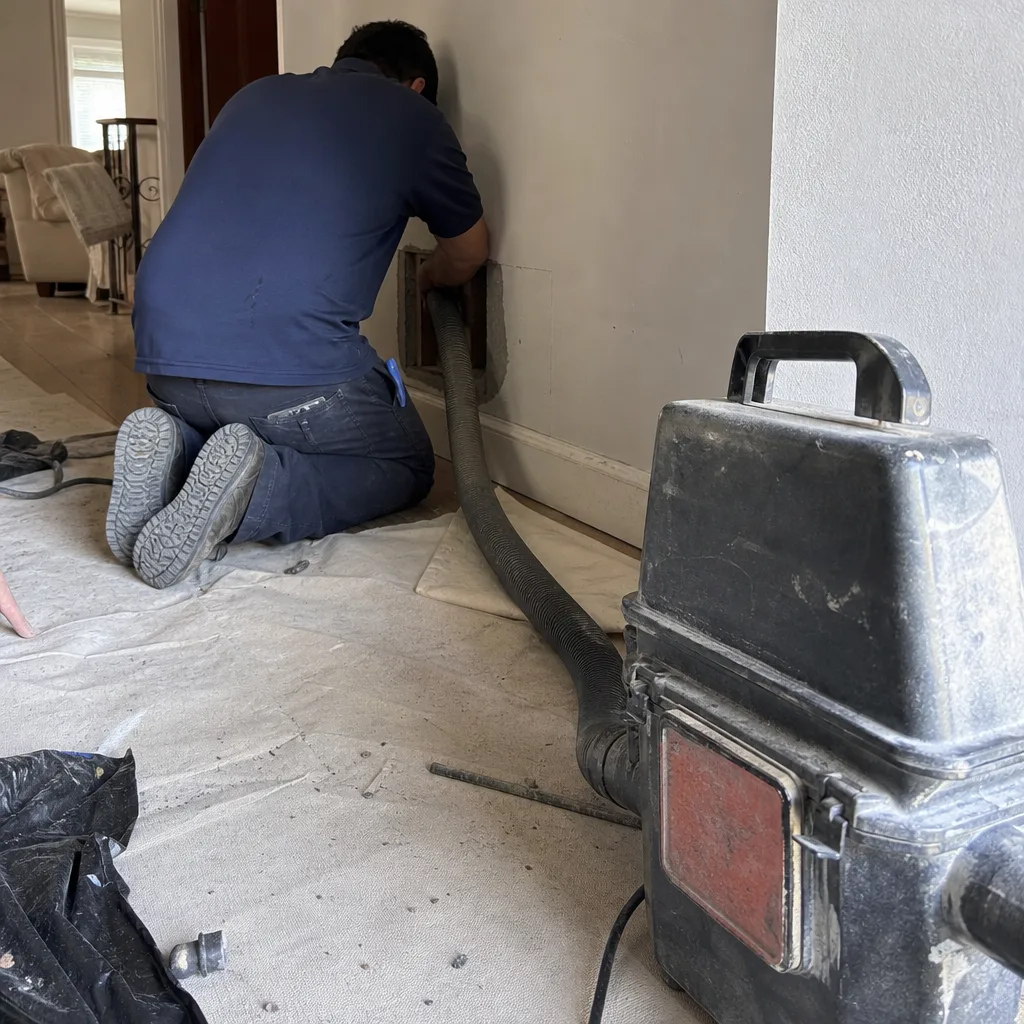 Before
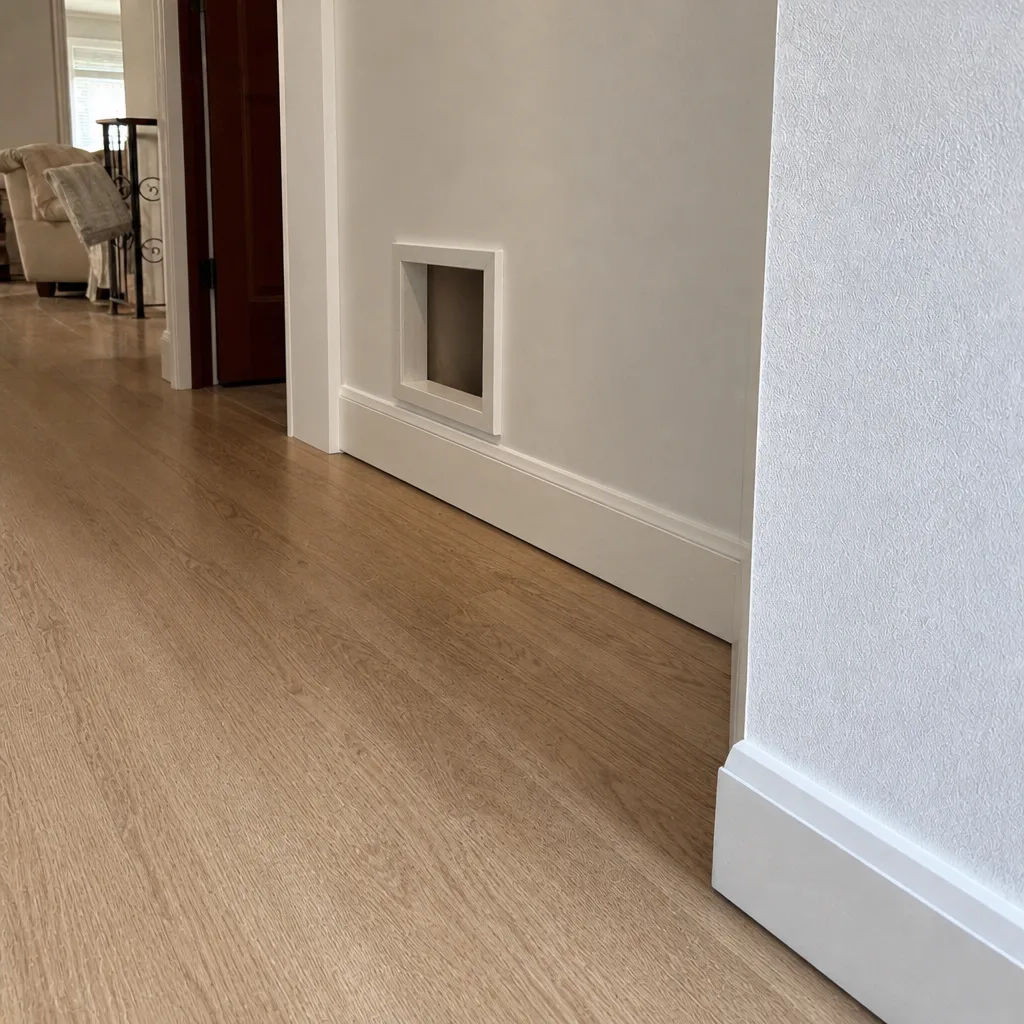 After
When to Call a Professional
Not every home in South Coast Metro needs duct cleaning on a calendar. Some signals do justify a professional visit. If you notice musty odors when the system starts up, visible dust blowing from registers immediately after the system activates, or symptoms that flare only when the HVAC is running, those point to contamination that needs assessment. Uneven airflow between rooms, or rooms that never heat or cool properly, can indicate a disconnected flex branch or a leaky plenum. A recent renovation, especially one involving drywall or flooring, leaves debris in the return system that a filter won’t catch. And if your system has gone more than several years without a full-pathway cleaning, the air handler and coil are almost certainly carrying a load. Air Duct Cleaning South Coast Metro offers free estimates in South Coast Metro. Call (833) 468-5980; we answer 24/7, with fast dispatch from 7am to 7pm, Sunday through Friday.
Frequently Asked Questions
Air duct cleaning cost in South Coast Metro depends on the number of zones covered, the condition of the system, and whether the air handler and coil are included. Typical whole-system jobs including all five zones range from several hundred to several thousand dollars. A quote that names only the ducts is quoting a partial job. Call (833) 468-5980 for an exact quote; estimates are free.
Cheaper quotes usually describe fewer zones and less equipment. A crew that cleans trunk lines with an air whip, skips the air handler, and provides no verification report is doing roughly 40% of a complete job. Rotobrush and Nikro contact cleaning, HEPA containment, and air handler access all take time and equipment. The price differs because the job differs. Call (833) 468-5980 for an exact quote; estimates are free.
You know the work was done when you receive a verification report with before-and-after photographs of each zone, containment documentation, and condition notes. A report that lists zones cleaned and shows matched photo pairs from the same location is your proof. Ask for the report format before booking. Call (833) 468-5980 for an exact quote; estimates are free.
Most homes benefit from a full-pathway cleaning every three to five years. In South Coast Metro, the higher humidity means contamination binds to surfaces more quickly, so homes with allergy-sensitive occupants or pets may justify more frequent cleaning. New construction, renovations, and moves are also triggers. Call (833) 468-5980 for an exact quote; estimates are free.
Yes. The Pacific-influenced humidity keeps dust on duct surfaces just damp enough to support dust mite activity and biological growth, and it keeps evaporator coils wet longer during cooling season. Inland homes with dry air tend to have looser, easier-to-remove dust. Coastal-climate homes need contact cleaning to break the bond. Call (833) 468-5980 for an exact quote; estimates are free.
Yes. Duct repair and sealing is part of the scope. If the cleaning inspection finds disconnected flex branches, plenum gaps, or crushed sections, we can fix them in the same visit rather than documenting and referring out. Repairing after cleaning prevents the system from re-contaminating through the same gaps. Call (833) 468-5980 for an exact quote; estimates are free.
The Bottom Line
Air duct cleaning in South Coast Metro works best when it treats the HVAC pathway as one system. The five zones (returns, return plenum, air handler and coil, supply plenum, and flex branches) all hold debris, and the parts you can’t see carry the most. A complete job uses rotary-brush contact cleaning, HEPA containment, and a verification report with matched before-and-after photos. It includes the air handler. It can repair and seal what it finds. And it ends with an upgrade path like Honeywell or Aprilaire filtration so the clean system stays clean. If you want to know what a complete job looks like in your home, call (833) 468-5980 for a free estimate. We answer 24/7, with fast dispatch from 7am to 7pm, Sunday through Friday. We’re closed Saturday.
Written by the team at Air Duct Cleaning South Coast Metro.