
Last updated November 24, 2026
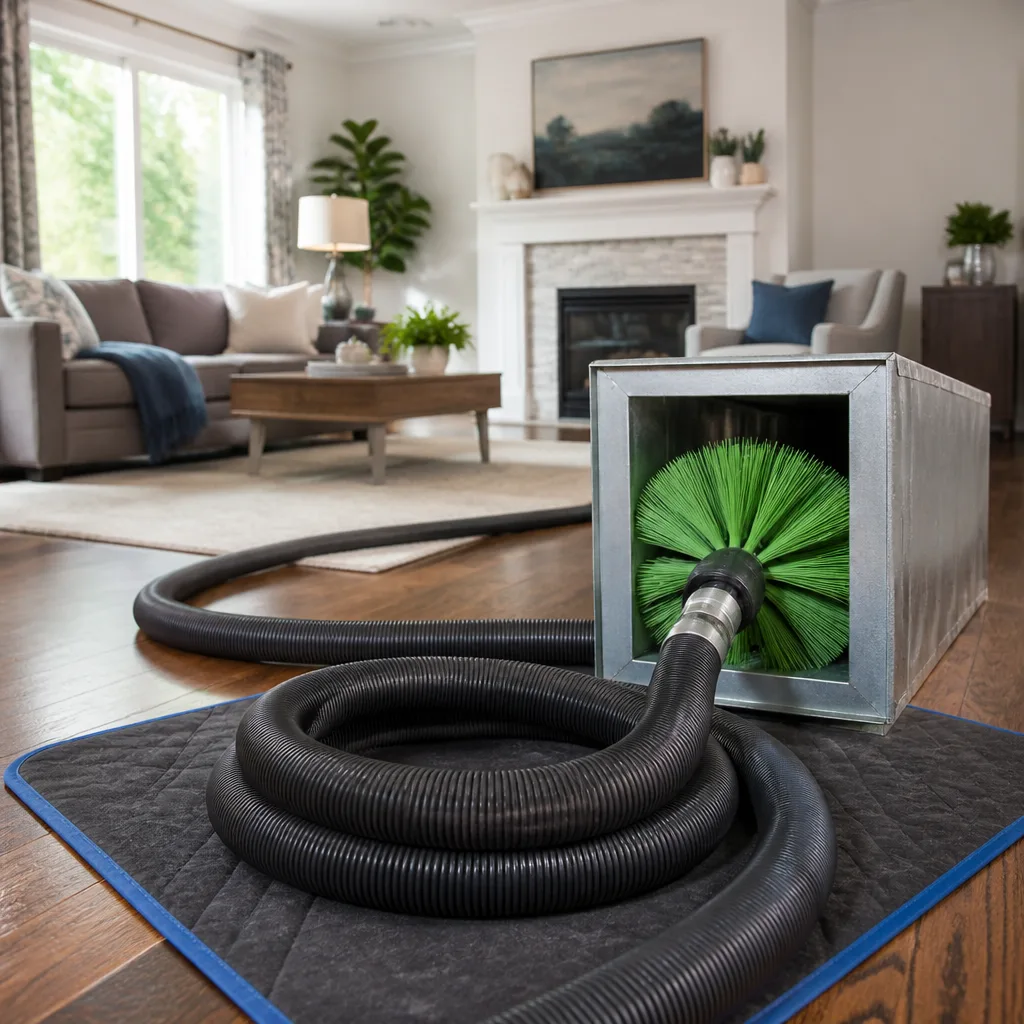 Whole-home duct cleaning
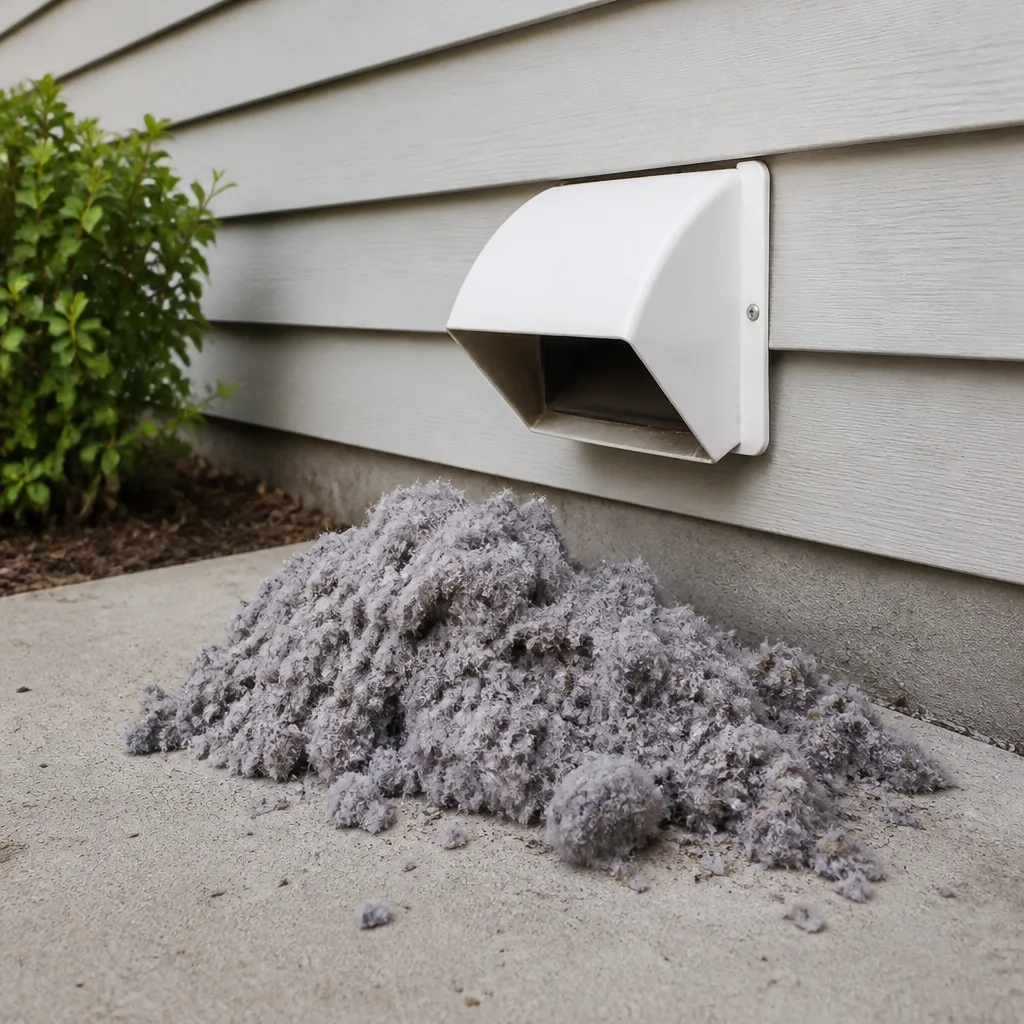 Dryer vent cleaning
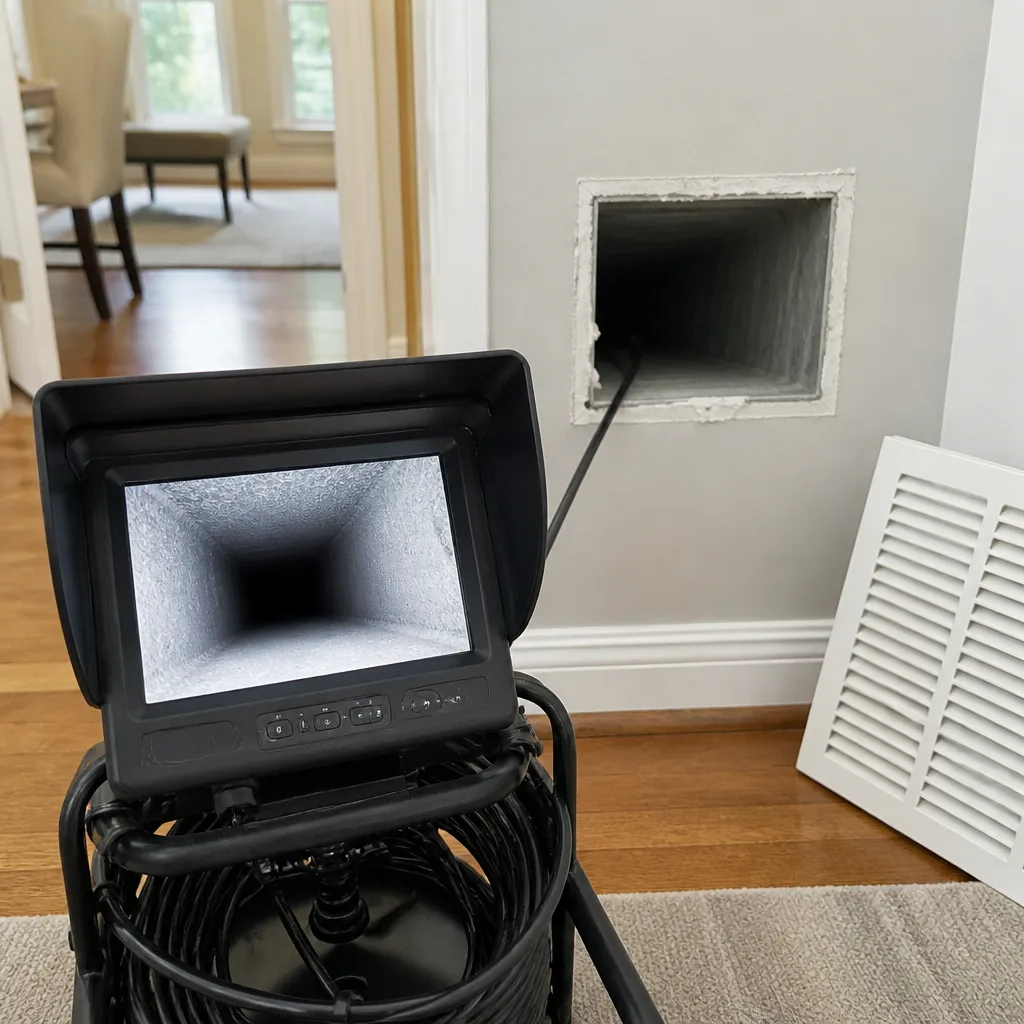 Camera inspection
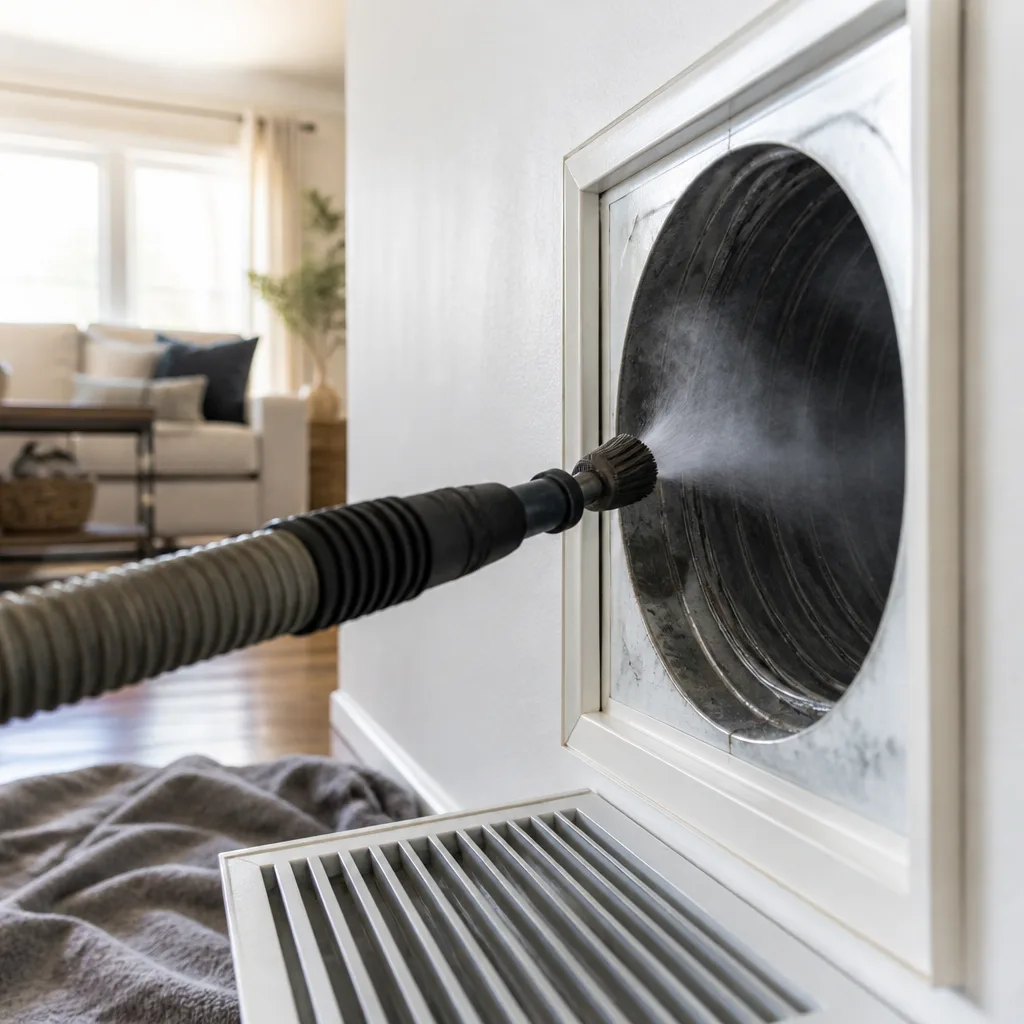 Sanitizing & deodorizing
Whole-system duct and dryer vent check with before-and-after photos - you see exactly what came out of your vents
That "$99 whole-house special" is a bait ad - the real number appears once they are in your hallway, or the "clean" is a shop-vac at the register. We photograph the inside of your ducts before and after instead.
Choosing the Right Air Duct Cleaning Brand: A Buyer’s Guide for South Coast Metro
Two trucks can pull up to the same South Coast Metro curb on the same morning, and the brand decal on the side tells you almost nothing about what happens next. One technician may run a scripted 45-minute vacuum pass and hand over a receipt. The other may spend three hours mapping your supply and return pathways, checking static pressure, and finding the disconnected boot behind a kitchen cabinet that’s been dumping conditioned air into a wall cavity for years. The customer paid similar money for both. The difference wasn’t the logo on the truck. It was capability and scope. This guide gives you a framework for comparing what a company can actually do, not what its brochure claims.
Quick Answer
Choosing the right air duct cleaning brand in South Coast Metro comes down to comparing capability and scope, not marketing. Ask what equipment the company runs (a rotary-brush system like Rotobrush plus a HEPA-rated vacuum, not just an air whip), whether the technicians hold duct-specific credentials like NADCA or ASCS rather than only general HVAC certifications, and whether the company can repair and seal what it finds instead of handing you a photo and a referral. A brand that can diagnose, clean, repair, seal, and sanitize your entire HVAC pathway in one relationship is a different animal from a franchise optimized for appointment volume.
Styles & brands we work with
- Whole-home duct cleaning
- Dryer vent cleaning
- Camera inspection
- Sanitizing & deodorizing
Table of Contents
- Franchise Model vs. Independent Specialist: What Actually Differs
- Which Certifications Matter for Duct Cleaning, and Which Don’t
- How to Evaluate Equipment by Asking the Right Questions
- Why Local Knowledge of South Coast Metro Building Stock Matters
- The Five-Part Scope Test: What a Complete Job Really Includes
- Post-Service Documentation: What You Should Receive
- The Side-by-Side Evaluation Scorecard
- Pricing Models and Red Flags to Watch For
Franchise Model vs. Independent Specialist: What Actually Differs
National duct cleaning franchises and independent specialists operate on different business math, and that math shows up in your living room. A franchise typically runs on a high appointment volume with tightly scripted service tiers, because the parent company’s revenue depends on predictable throughput across hundreds of territories. The technician’s day is scheduled in blocks. An independent specialist has fewer appointments and more latitude to spend three hours in one house when the system calls for it.
None of this makes franchises dishonest or independents automatically better. Some franchise operators invest heavily and do careful work. But the incentive structure shapes what gets offered, and you should understand it before you compare quotes.
Here’s what tends to differ in practice:
- Equipment investment. A franchise may standardize on one vacuum platform across all territories, sometimes a consumer-grade or mid-tier unit that meets the minimum for the brand’s service package. An independent buys equipment based on what the work requires, which often means a rotary-brush contact system and a separate HEPA containment setup.
- Technician training depth. Franchise training is usually brand-specific and scripted. Independent training often tracks industry certification curricula, where the emphasis is on airflow diagnostics and contamination control.
- Scope flexibility. A franchise service menu is set at the corporate level. An independent can quote repair and sealing alongside cleaning because the same technician is trained to do both.
- Upsell structure. Franchise pricing frequently separates “base cleaning” from add-ons like sanitizing or deodorizing. An independent more often quotes one flat price per system covering the full protocol.
In our experience serving South Coast Metro, the homeowners who end up dissatisfied are rarely the ones who paid the least. They’re the ones who accepted a quote without asking what equipment would arrive and what the technician would be able to fix. When you’re comparing an air duct cleaning quote, the scope question matters far more than the brand name on the invoice.
Which Certifications Matter for Duct Cleaning, and Which Don’t
Certification language on a duct cleaning website is where a lot of confusion gets manufactured. General HVAC credentials get presented as though they certify duct cleaning expertise, and they don’t. Here’s how to sort the real ones from the borrowed ones.
NADCA (National Air Duct Cleaners Association). This is the duct-specific credential that matters most. NADCA publishes the industry’s assessment, cleaning, and restoration standard and offers Air Systems Cleaning Specialist (ASCS) certification. If a company names NADCA or ASCS, it’s claiming duct-specific training rather than general HVAC training.
ASCS (Air Systems Cleaning Specialist). A credential issued through NADCA’s certification program. It covers source removal methods, containment, and inspection protocol. If a company names ASCS, ask how many technicians hold it.
EPA Section 608. This certifies technicians to handle refrigerants. It’s a real credential, but it has nothing to do with duct interiors. It’s relevant if the company also services your HVAC system’s refrigerant circuit. It says nothing about whether they can clean a supply trunk properly.
NATE (North American Technician Excellence). A general HVAC certification covering system installation and service. Useful for HVAC work and a legitimate signal that the technician knows HVAC systems broadly. Not duct cleaning certification.
The important move here is simple. When a website lists five certifications, ask which one covers duct cleaning specifically. If the answer is vague or the page doesn’t name a duct-specific credential, you’ve learned something useful.
One additional equipment note worth knowing: a company using Abatement Technologies negative-air and HEPA containment equipment is signaling that it treats duct cleaning as contamination control, not just vacuuming. That class of equipment is used in remediation work, and its presence tells you the company thinks about where dislodged debris goes during the job.
How to Evaluate Equipment by Asking the Right Questions
You don’t need to become a duct cleaning technician to evaluate equipment. You need three specific questions, asked by phone before you book. The answers separate companies that have invested in real equipment from companies running a shop vac with a hose extension.
Ask these in order:
- “What’s the vacuum’s static pressure and airflow rating?” A serious duct cleaning vacuum is rated in inches of water lift (static pressure) and cubic feet per minute. A rotary-brush system cleaning duct interiors needs enough lift to hold loosened debris in suspension inside the hose. If the person answering can’t give you a rating or describes “a powerful truck-mounted unit” without numbers, that’s information.
- “Do you use a rotary brush system or air whips?” Rotary brush systems like Rotobrush make physical contact with duct walls and scrub the buildup off. Air whips and skipper balls use compressed air to knock debris loose without contact. Contact cleaning removes adhered particulate that air alone leaves behind. Some companies use both. None should use air whips alone and call it cleaning.
- “What containment do you set up while cleaning?” A company that answers this question clearly has thought about cross-contamination. Negative-air machines and HEPA filtration keep dust from migrating into the rest of your home during the job, especially important in slab-on-grade homes where the air handler may sit in a closet adjacent to living space.
Our technicians run Rotobrush rotary-brush systems for contact cleaning and Nikro-certified HVAC cleaning equipment on every job, with Abatement Technologies containment controlling dust migration. The point of naming equipment isn’t decoration. It’s that equipment you can name is equipment you can verify. When you compare quotes, ask each company the same three questions and write down the answers.
Why Local Knowledge of South Coast Metro Building Stock Matters
South Coast Metro sits at the intersection of several distinct building eras. The area’s housing ranges from mid-century tract homes to newer mid-rise condominium buildings, and the duct systems in each look nothing alike. A company that quotes every house off a standard square-footage chart will either under-scope yours or pad the estimate.
Slab-on-grade construction is common across much of the area. In these homes, the air handler frequently sits in a closet, a garage, or a tight platform space rather than a full basement (which the region’s building stock generally doesn’t have). Duct runs often travel through the attic or through soffit chases, and the return path sometimes shares space with plumbing walls. Access conditions vary from house to house on the same street.
Attic conditions matter too. Most South Coast Metro homes have attic duct runs, and attic inspection is where the real findings happen: disconnected flex runs, crushed sections behind knee walls, boots that have pulled loose from the register, seams that were never sealed. A company that won’t open the attic access and look isn’t scoping your job. It’s just vacuuming what’s reachable from the vents.
Winters here are mild, so duct systems rarely endure the temperature extremes of colder regions. That doesn’t mean they’re clean. It means the problems tend to be gradual: dust accumulation over years, moisture from shower and laundry vents bleeding into return air, and the growing gaps that come with flex duct that’s been sitting in a hot attic for a couple of decades.
When you’re talking to a company, ask one local question: “How do you scope attic duct runs in homes like mine?” An experienced local operator will describe inspection before cleaning and mention what they typically find. A volume operator will describe a flat package price.
Local knowledge also shapes the sequencing of what we recommend. In South Coast Metro, a full-system assessment often uncovers sealing needs before cleaning makes sense, because cleaning an unsealed system means the debris comes right back. If you want a deeper walkthrough of the cleaning process itself, the air duct cleaning page covers the workflow in detail.
The Five-Part Scope Test: What a Complete Job Really Includes
Duct cleaning isn’t one service. It’s up to five distinct services that overlap in the same air pathway, and a company’s willingness to offer all five tells you whether they can actually solve your problem or whether they’ll hand you off to somebody else halfway through.
The five parts of a complete air pathway job:
- Duct cleaning. Source removal of debris from supply and return runs, registers, grilles, and the air handler cabinet. This is the baseline. Every legitimate company offers it.
- Dryer vent cleaning. A separate system entirely, and a fire-safety service rather than a duct-cleaning add-on. Lint accumulation in the dryer exhaust is a leading cause of residential fires, and the vent path is not connected to your HVAC ducts. A company that treats this as its own service understands the difference.
- HVAC cleaning. The air handler, evaporator coil, blower wheel, and drain pan. If the coil is fouled, clean ducts downstream of it will re-foul. HVAC cleaning is what protects the cleaning you just paid for. The HVAC cleaning page explains what’s included in that portion.
- Duct repair and sealing. The step most companies skip. Disconnected runs, crushed flex, failed mastic, and unsealed boot-to-floor connections are the root cause of energy loss and re-contamination. A company that can only clean will document these problems and leave them for you to solve with a different contractor. A company that offers repair and sealing closes the loop.
- Sanitizing. The final layer of a complete protocol, applied after cleaning and repair when a source has been identified (moisture intrusion, pest activity, or persistent odor). It’s not a substitute for source removal and shouldn’t be sold as one.
If you’re looking for dryer vent work specifically, the dryer vent cleaning page covers how that job runs. The key point for this guide: a company offering all five parts can resolve every air pathway problem in a single relationship. A company offering only the first cannot, and you’ll be coordinating vendors for the rest.
Post-Service Documentation: What You Should Receive
The single best predictor of whether a duct cleaning was done properly is what the company can show you afterward. Documentation is where volume operations cut corners and where serious operators separate themselves.
Here’s what a competent company should be able to provide at the end of a job:
- Before-and-after photos of your own ducts and air handler. Not stock photos, not photos from another job. Your system, clearly identifiable.
- An inspection report noting what was found. Disconnected runs, damaged flex, moisture evidence, debris type, and location of findings.
- Documentation of any repair or sealing performed. Materials used, areas sealed, and how they were sealed.
- A written recommendation for remaining issues. If a run needs replacement that wasn’t part of the original scope, you should have it in writing so you can decide separately.
- A sanitation record if sanitizing was performed. Product used and areas treated.
Ask about this before you book, not after. The question “Will I receive before-and-after photos of my own ducts?” gets a fast, clear answer from companies that do it routinely. The hesitation from companies that don’t tells you what you need to know.
Documentation also creates accountability. When a company knows it owes you photos, it cleans to the standard the photos will show. That’s a healthier incentive structure than a post-job survey.
The Side-by-Side Evaluation Scorecard
Here’s the practical part. When you have two or three companies lined up, score them on the same criteria so your decision isn’t driven by whoever called back first. Use this as a worksheet. Give each company a score of 0, 1, or 2 on each line (0 = no, 1 = partially or unclear, 2 = yes, clearly).
Scope (max 10)
- Offers all five parts: cleaning, dryer vent, HVAC, repair/sealing, sanitizing
- Scopes attic and crawlspace runs, not just reachable vents
- Quotes one flat price per system, not a per-vent or tiered package price
- Bundles inspection into the estimate rather than charging separately
- Can fix what’s found, not just document it
Credentials (max 6)
- Names a duct-specific certification (NADCA, ASCS) as the primary credential
- Technicians are trained on diagnostics, not a single script
- Company can explain the difference between duct and HVAC certifications
Equipment (max 8)
- Uses rotary-brush contact cleaning (Rotobrush or equivalent)
- Can state the vacuum’s static pressure and airflow rating
- Uses HEPA containment or negative-air equipment
- Uses professional-grade HVAC cleaning equipment (Nikro or equivalent)
Post-service (max 6)
- Provides before-and-after photos of your own system
- Provides a written inspection report
- Documents repair and sealing work performed
A company scoring 26 or above is a serious operator. A company scoring below 18 is telling you their business model isn’t built around comprehensive work. Companies that won’t answer the equipment questions at all shouldn’t get a score. That’s your answer.
This scoring approach works because it forces the comparison onto verifiable facts. Brand names, review counts, and coupon offers don’t appear on the scorecard for a reason: they don’t tell you what happens in your attic.
Pricing Models and Red Flags to Watch For
Duct cleaning has a reputation problem, and the reputation is earned. The bait-and-switch model – a teaser coupon price that expands into a far larger invoice once the technician is inside – is common enough that you should go into every conversation expecting to encounter it somewhere. Here’s how to filter for it up front.
Red flag: per-vent pricing with a low teaser rate. A quoted price “per vent” with a coupon floor is a structure designed to grow. The final bill depends on how many vents the technician counts in your home, not on what the job takes. A serious operator quotes one flat price per system after scoping.
Red flag: no scoping before the price. A price given over the phone without any questions about your home’s layout, number of systems, attic access, or building era is a package price, not an estimate of your job.
Red flag: sanitizing sold before cleaning. Sanitizing is a final step. If it’s being pushed as the headline service, or bundled into a package before any assessment, the protocol is upside down.
Red flag: no attic access. If a technician won’t open the attic hatch, the job isn’t a full-system cleaning. Ask directly: “Will you be inspecting the attic runs?”
Red flag: no photos afterward. A company that can’t show you your own ducts after the job is asking you to take the work on faith.
Red flag: adding repair as a separate contractor. If the company finds disconnected runs and refers you elsewhere, they’ve sold you half a service. In South Coast Metro homes with significant attic flex duct runs, disconnected and crushed sections are common findings. A company without repair capability will discover problems it can’t solve.
The counter-model is straightforward: a full assessment, a written flat price per system for the whole protocol, and before-and-after photos of your own system at the end. If a company’s structure doesn’t match that, the price difference you see up front won’t survive the invoice.
Common Mistakes to Avoid
- Booking from a coupon without asking about equipment. The coupon price is the entry point, not the job. Ask what vacuum and brush system will arrive before you commit. Two sentences of questioning eliminates most of the risk.
- Assuming a general HVAC certification covers duct cleaning. EPA 608 and NATE certify HVAC work, not duct interiors. Look for NADCA or ASCS if you want duct-specific training.
- Letting a company clean without inspecting attic runs. In South Coast Metro’s housing stock, the attic is where the actual findings live: disconnected flex, crushed sections, failed seams. Cleaning only the reachable vents leaves the source in place.
- Treating sanitizing as the main service. Sanitizing applied over an uncleaned system treats the symptom. Source removal comes first, always.
- Skipping dryer vent cleaning because it isn’t part of the HVAC ducts. It’s a separate system and a fire-safety issue. If you’re booking duct work, ask about the dryer vent at the same time.
- Not asking for before-and-after photos. This single request changes how seriously the job gets done. Make it before you book, not after.
- Hiring a company that only cleans and can’t repair. If the inspection finds disconnected runs or failed seals, a clean-only company documents the problem and leaves. You then hire someone else to fix it, and the system re-fouls in the meantime.
See the difference
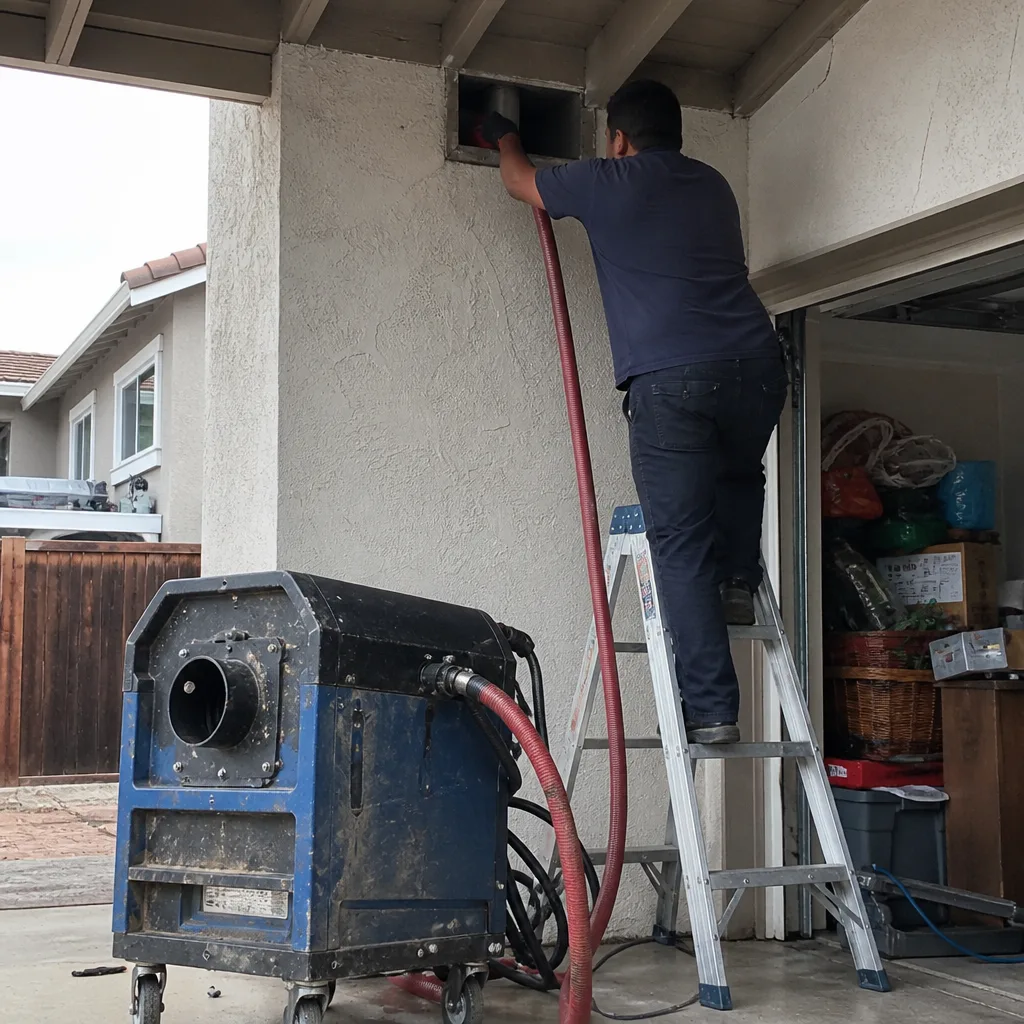 Before
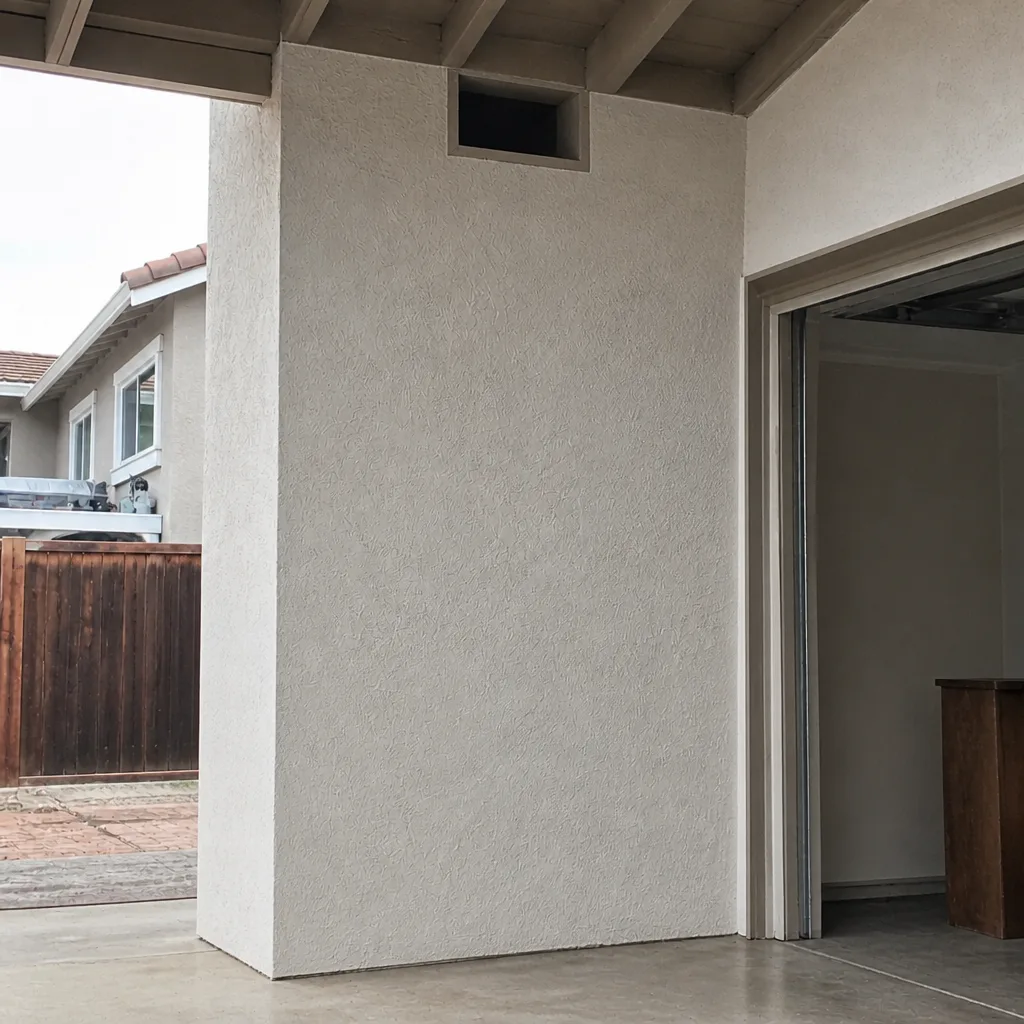 After
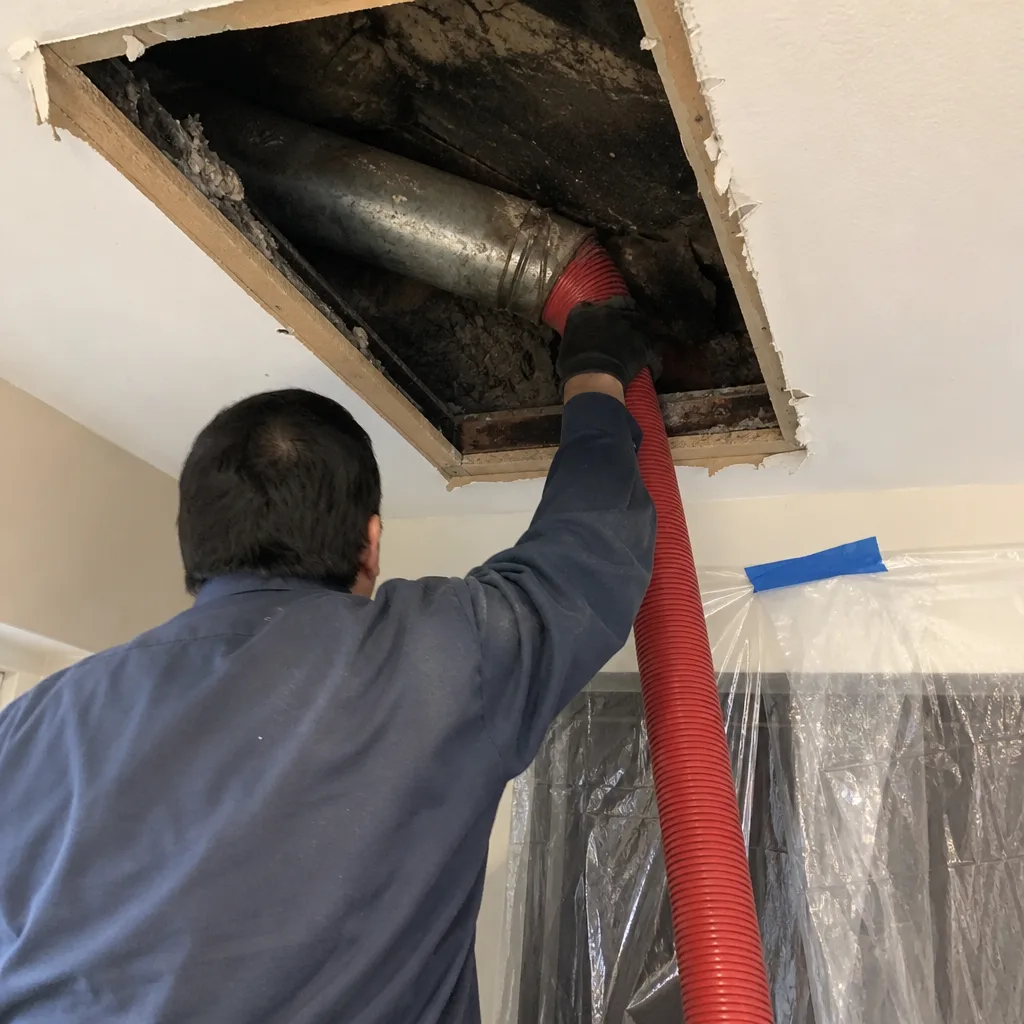 Before
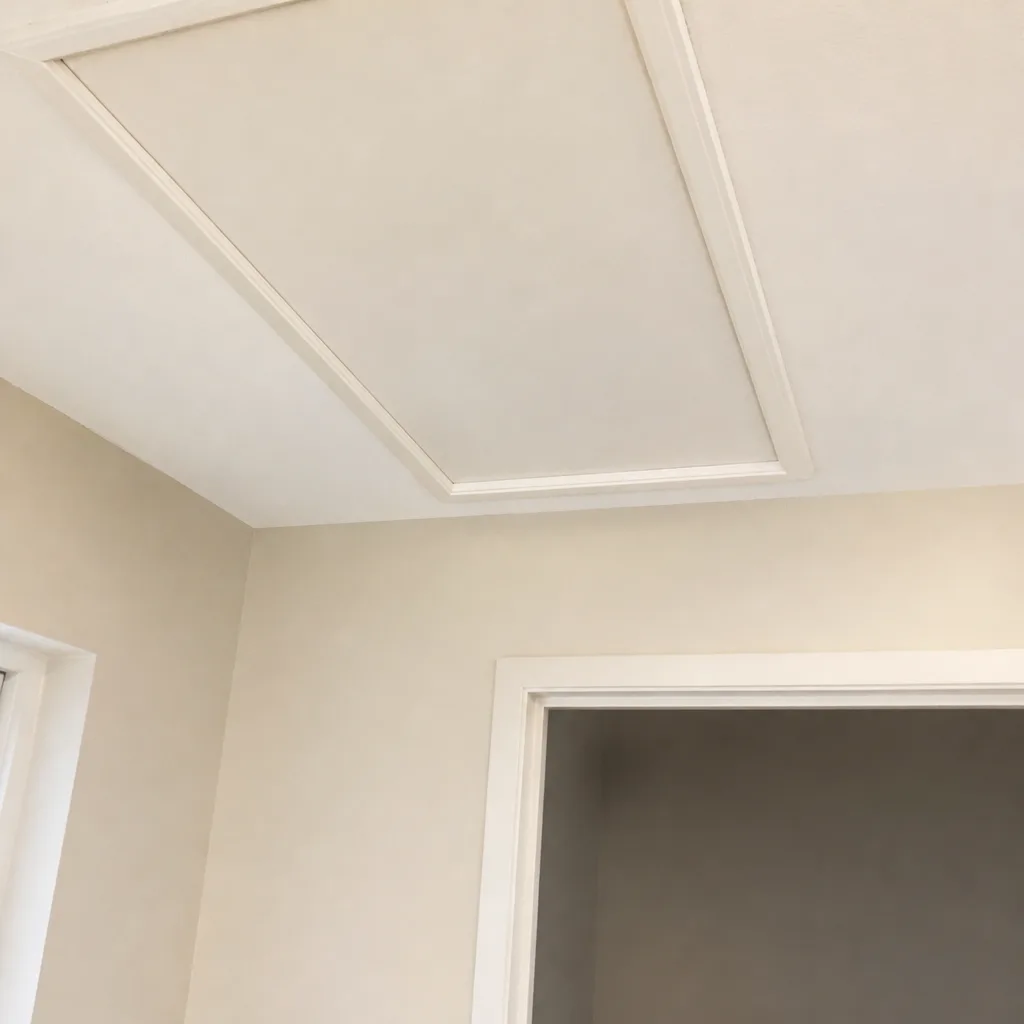 After
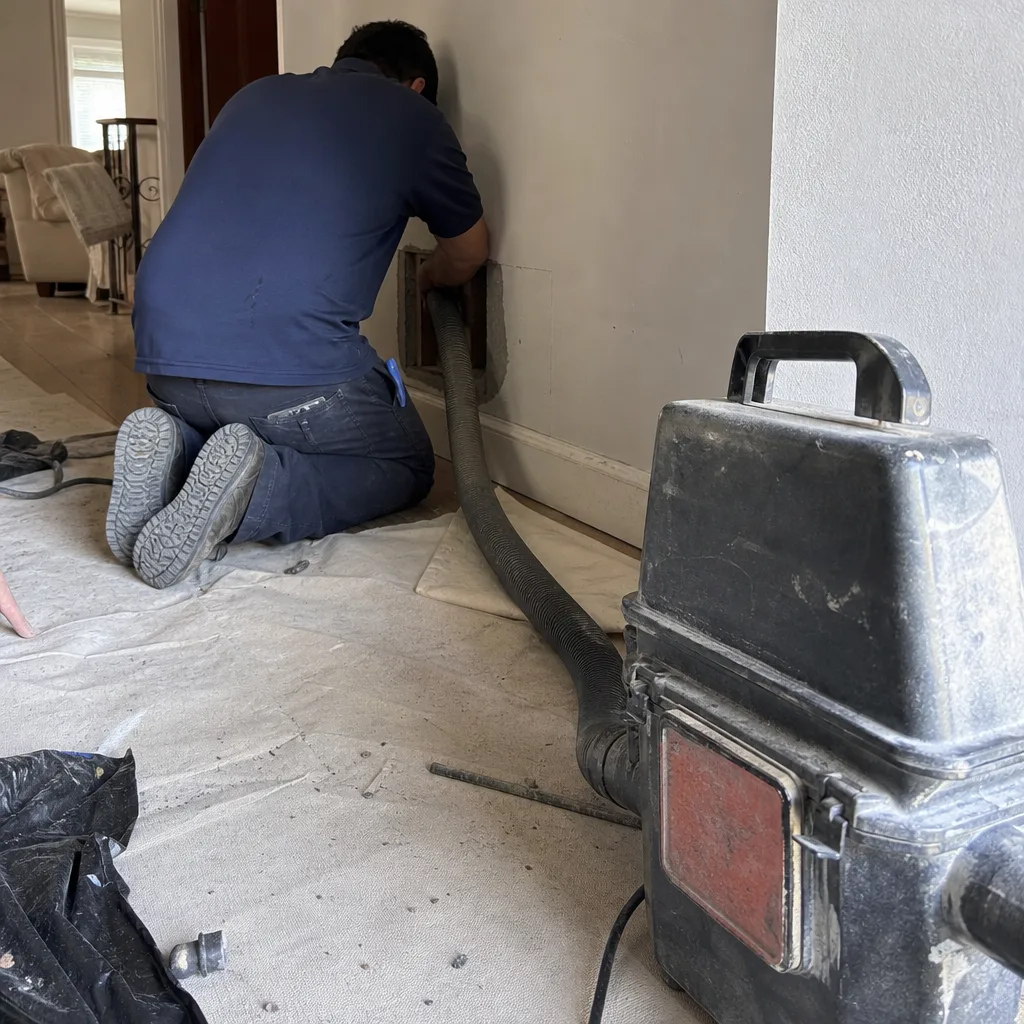 Before
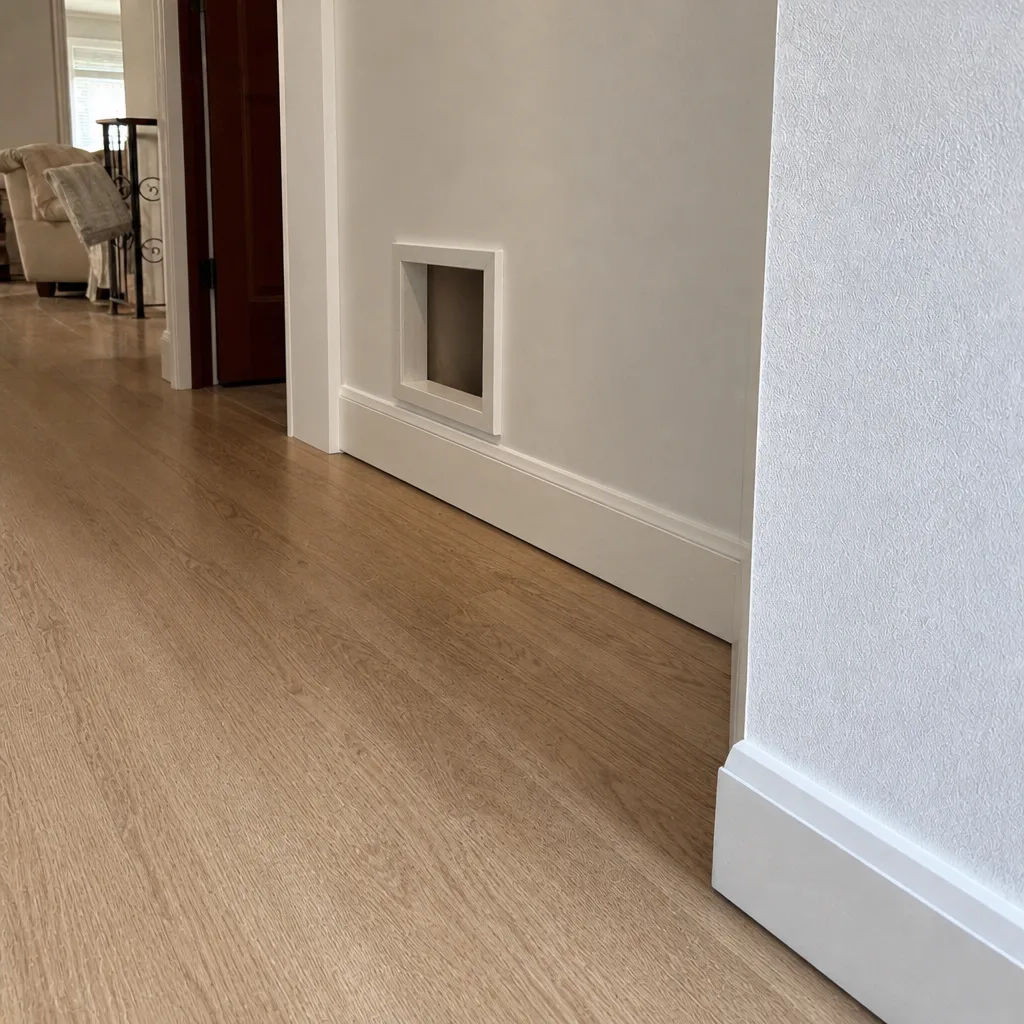 After
When to Call a Professional
Some air quality issues resolve with a filter change. Others need a professional assessment. Call when you notice persistent musty odor coming from the registers, visible dust streaking from the vents, uneven airflow between rooms that hasn’t responded to filter changes, allergy symptoms that worsen when the system runs, or an unexplained climb in your energy bills. Call if it’s been more than a few years since the system was serviced and you’ve never had an inspection. Call if you’ve noticed lint buildup behind the dryer or the dryer takes longer than it used to. Call before you renovate or after any water intrusion event that reached the ductwork. Air Duct Cleaning South Coast Metro offers free estimates in South Coast Metro – call (833) 468-5980. We answer 24/7. Fast dispatch from 7am to 7pm, Sunday through Friday.
Frequently Asked Questions
Choose based on what the company can actually do, not on brand recognition or price alone. Ask three questions: what vacuum and brush equipment they use, which duct-specific certifications their technicians hold, and whether they offer repair and sealing alongside cleaning. A company that answers all three clearly, and provides before-and-after photos afterward, is a serious operator. Call (833) 468-5980 for a free estimate.
Yes, NADCA is the most relevant certification for duct cleaning specifically. NADCA publishes the industry standards for assessment, cleaning, and restoration, and its ASCS credential covers duct-specific training. EPA 608 and NATE are legitimate HVAC credentials but certify different work. A company leading with a duct-specific certification is telling you what they’re actually trained to do.
Ask about the vacuum’s static pressure and airflow rating, whether the company uses a rotary brush system or air whips, and what containment they set up during cleaning. A rotary brush system like Rotobrush makes contact with duct walls and scrubs buildup off, where air whips only knock debris loose. HEPA containment or negative-air equipment controls dust migration into your living space. Companies using professional-grade equipment can answer these questions on the spot.
Quotes vary because the scopes are different, even when the labels look identical. A low quote usually reflects a single-pass vacuum of reachable vents with no attic inspection, no repair capability, and no post-service documentation. A higher quote may cover full-system assessment, contact cleaning, HVAC coil and blower cleaning, containment setup, and photo documentation. Compare scope line by line before comparing the bottom-line number. Call (833) 468-5980 for an exact quote – estimates are free.
The mild winters here mean ducts don’t face the temperature extremes of colder regions, but that doesn’t mean they stay clean. Dust accumulates over years, and attic flex duct in this region develops gaps and disconnections slowly. Most homes benefit from an inspection every few years, with cleaning scheduled when inspection finds real buildup or damage. The building matters more than the climate.
Yes, if you’re already having work done, coordinate the dryer vent at the same visit. The two systems are separate and the dryer vent is a fire-prevention service rather than an HVAC service. Lint accumulation in the exhaust path is a real hazard that doesn’t show up in duct cleaning. A company that offers both can handle them together.
For homeowners comparing multiple brands, the Air Duct Cleaning South Coast Metro overview covers the company’s scope and service menu. If you’re weighing cleaning against HVAC service specifically, the HVAC cleaning page explains what that portion includes. If your main concern is the dryer side, dryer vent cleaning covers the safety angle. And for a full walkthrough of the cleaning protocol itself, the air duct cleaning page goes step by step.
The Bottom Line
The brand name on the truck matters less than what the company can do once the technician is inside. Score candidates on five parts: whether they offer the full scope of cleaning, dryer vent, HVAC, repair and sealing, and sanitizing; whether their certifications are duct-specific or borrowed from general HVAC; whether their equipment includes rotary-brush contact cleaning and HEPA containment; whether they scope attic runs instead of only reachable vents; and whether they deliver before-and-after photos of your own system. A company that clears all five is worth a conversation. A company that clears two or three is telling you its business model. In South Coast Metro, the difference shows up in your attic, not your inbox.
If you’d like to run these questions past a technician who can answer them directly, call Air Duct Cleaning South Coast Metro at (833) 468-5980 for a free estimate. We answer 24/7. Fast dispatch from 7am to 7pm, Sunday through Friday. Our technicians have up to 8 years of experience, and the local pro is licensed and insured as their state requires.
Written by the team at Air Duct Cleaning South Coast Metro.